Coal DMO Increased but Supply Remains Tight for Power Plants
01 Mar 2026, 01:13 AM 4909

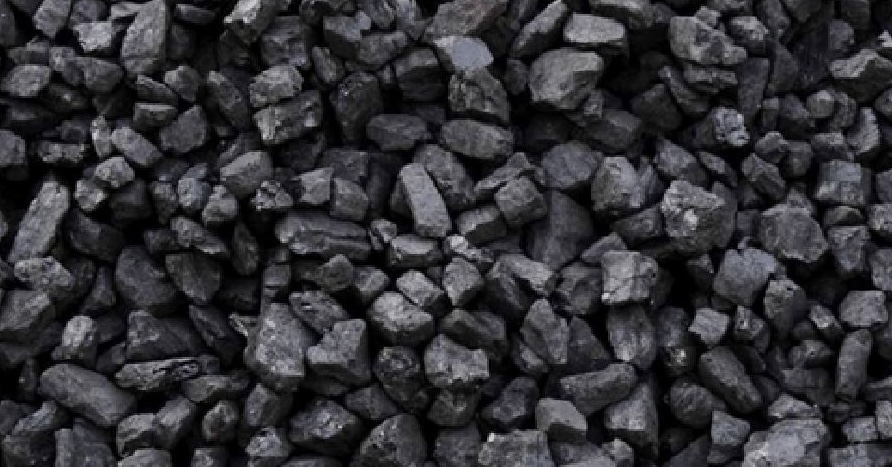
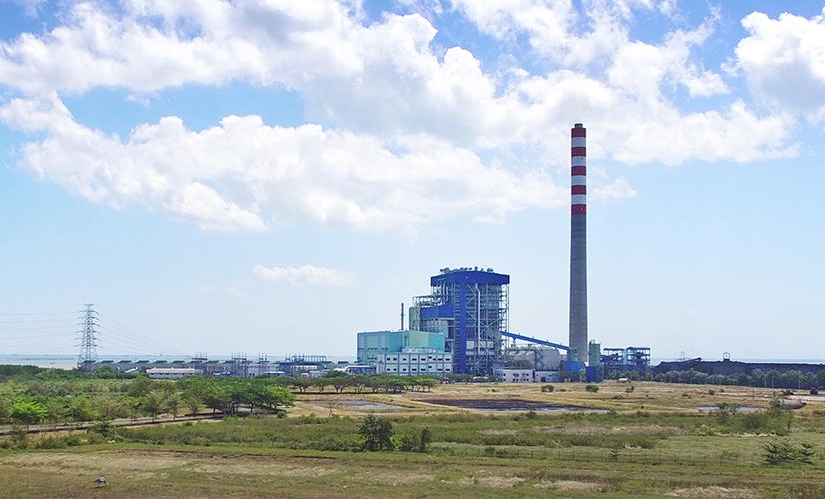
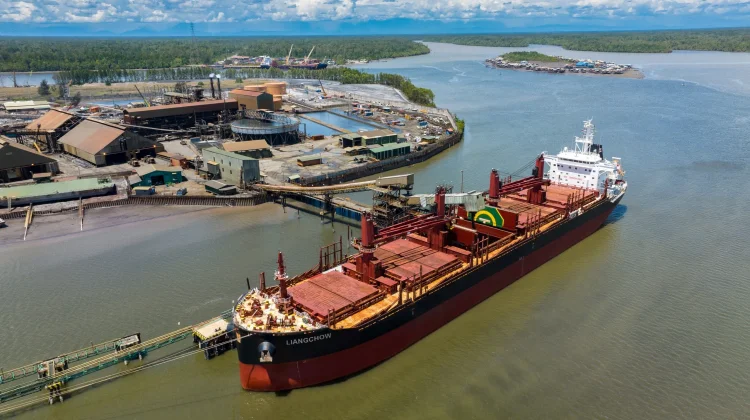
Indonesia remains a major player in the global coal trade. In 2025, Indonesia accounted for approximately 43% of the world's coal trade, with national production reaching 790 million tons.From that total, the Domestic Market Obligation (DMO) allocation was recorded at 254 million tons, or approximately 32% of the total production.However, despite this dominance, several domestic coal-fired power plant (PLTU) operators have reported coal reserves hovering around 10–15 Days of Operation (HOP), approaching the minimum safety limit for the system.In the current situation, the government plans to adjust production quotas in the 2026 Work Plan and Budget (RKAB). Coal production is set to be reduced to approximately 600 million tons, while the DMO portion will be increased to around 30% of total national production.In line with this, the Directorate General of Mineral and Coal at the Ministry of Energy and Mineral Resources (ESDM) is also drafting a new Ministerial Decree to adjust changes to the RKAB mechanism, which will now apply annually rather than every three years.Minister of Energy and Mineral Resources Bahlil Lahadalia stated that the policy to reduce production is being implemented to balance the global supply, which is deemed excessive, and to stabilize prices."The result? Supply and demand were not maintained, and eventually, coal prices fell. The Director General of Mineral and Coal is recalculating. What is clear is that it will be around 600 million tons. Around that. Coal. More or less. It could be less, it could be slightly more. Note that it's 'more or less'; don't say exactly 600," Bahlil said during a press conference in Jakarta on Thursday (Jan 9, 2026).DMO Increases to 30%, but Supply StallsRegulation-wise, the coal DMO obligation refers to Law Number 3 of 2020 concerning Mineral and Coal Mining. Technical provisions are further regulated through ESDM Ministerial Decree Number 13 of 2022, which mandates that at least 25% of production be allocated for domestic needs, including power plants, cement industries, and fertilizer plants.In its latest development, the Ministry of Energy and Mineral Resources (ESDM) confirmed that the DMO portion this year has been increased to 30% of total national production. Deputy Minister of ESDM Yuliot Tanjung stated that based on demand calculations, domestic supply should be sufficient."Last week, regarding the availability of primary energy—especially coal—we coordinated with PLN, and it was conveyed that for DMO, around 30 percent of total production is used for domestic power plant needs. So, based on demand, it should be enough," Yuliot said when met at his office in Jakarta on Friday (Feb 27, 2026).Production and DMO Trends Continue to RiseIn the last five years, national coal production realization has jumped significantly:2020: 564 million tons (DMO 132 million tons)2021: 614 million tons (DMO 133 million tons)2022: 687 million tons (DMO 216 million tons)2023: 775 million tons (DMO 213 million tons)2024: 836 million tons (DMO 233 million tons)2025: 790 million tons (DMO 254 million tons)In absolute terms, the 2025 DMO volume is nearly double that of 2020. Both the absolute volume and percentage of the DMO have increased significantly, even reaching 32% of total national production in 2025—higher than the minimum allocation of 25%.Field Facts: Slim StocksAt the power plant operator level, stock conditions are reported to be within safe limits but at minimum levels. Kanapi Subur Dwiyanto, Director of Planning and Marketing at PLN Nusantara Power Services, admitted that supply constraints are occurring at both PLN and Independent Power Producer (IPP) plants."Everyone is now constrained, both at PLN and IPP plants, but it is more difficult at IPPs. Thank God, inventory remains safe at PLN NP," he told Warta Ekonomi on Friday (Feb 27, 2026).Meanwhile, the Director of PLN Indonesia Power (PLN IP), Bernardus Sudarmanta, stated that current coal stocks are in the range of 10 to 15 days of operation. "Coal supply at PLN IP is safe at 10 to 15 days of operation. But if you say it's difficult to obtain, that's true, so it takes harder effort to maintain those needs," he said to Warta Ekonomi on Saturday (Feb 28, 2026).The government acknowledges distribution hurdles from mines to power plants, including weather factors affecting shipments. In the primary energy security system, power plants generally have a minimum reserve limit of 20 days before re-ordering."If it has decreased to less than 20 days, how this ordering system is communicated and processed must ensure no delays occur," said Yuliot.To safeguard domestic supply, the government has mandated Generation I PKP2B mining companies and SOE IUPs—which are not subject to production cuts—to supply 75 million tons in the first semester of 2026 to support domestic needs. "We expect 75 million tons from PKP2B and SOEs; we are pulling that into the first semester so that PLN can secure its supply first," said Director General of Mineral and Coal, Tri Winarno, in Jakarta on Thursday (Feb 12, 2026).DMO Prices and Priority PatternsFrom the perspective of Independent Power Producer (IPP) operators, supply issues are considered closely related to the price structure. Deputy Director of PT Cirebon Electric Power (CEP), Joseph Pangalila, explained that the DMO price for power plants is capped at USD 70 per ton, lower than the cement industry at approximately USD 90 per ton, while smelters follow market prices."The DMO for power plants is low at USD 70 per ton, while it's USD 90 per ton for cement factories and market price for smelters. Consequently, power plants become the last priority for supply by producers," he told Warta Ekonomi on Friday (Feb 27, 2026).CEP, which operates Cirebon 1 (600 MW) and Cirebon 2 (1,000 MW) power plants, noted that Unit 1 stocks are still above 20 days of operation, while Unit 2 is in the low teens due to a temporary maintenance shutdown. However, in general, most IPPs are said to be below the ideal threshold of 25 days of operation.He believes economic factors are the primary determinant of supply distribution on the ground, regardless of the high national production volume or the DMO portion set by the government."Since last year, when coal production was high, supply to power plants remained lacking because of the low DMO price for plants. We have tried to force producers to sell to us, but if they can sell to cement factories and smelters at a better price while also meeting their DMO requirements, then power plants become their last priority for DMO fulfillment," he explained.This situation is considered to impact the reliability of the electricity supply if coal reserves are not at an ideal level. Therefore, the Association of Indonesian Private Power Producers (APLSI) has asked the government to introduce policies that ensure mining companies prioritize coal allocations to power plants."Because of this, APLSI requests the Government to introduce policies so that mining companies can prioritize coal allocation to power plants so that minimum reserves can be met. That is what we hope for," he concluded.
Indonesia Sets Lower Copper Export Benchmark Price for Early March 2026
28 Feb 2026, 01:06 AM 1839

The Trade Ministry has set Indonesia’s export benchmark price for copper concentrate (Cu ≥ 15 percent) at USD 6,684.18 per wet metric ton (WMT) for the period of March 1–14, 2026, marking a 0.12 percent decline from USD 6,692.35 per WMT in the second half of February.The ministry issued the policy under Trade Minister Decree No. 375/2026 on export benchmark prices and reference prices for mining products subject to export duty. The decree was signed on February 27, 2026, and applies to the first half of March.Trade Ministry Foreign Trade Director General Tommy Andana said the decline in copper’s export benchmark price was driven by profit-taking and a stronger US dollar as global copper prices entered a consolidation phase.During the pricing period, copper prices on the London Metal Exchange briefly exceeded USD 13,000 per ton, reaching around USD 13,300 per ton on February 11. Prices later corrected to between USD 12,500 and USD 12,700 per ton before recovering to nearly USD 13,200 per ton by the end of February.Tommy added that copper prices fell by 1.44 percent during the calculation period, while silver dropped by 15.09 percent and gold rose by 1.31 percent. “The increase in gold prices was driven by increased demand for safe-haven assets and purchases by several global central banks amid growing global economic challenges,” Tommy said in a statement in Jakarta on Saturday, February 28, 2026, as quoted on the ministry’s official website.The government determines export benchmark and reference prices based on technical recommendations from the Energy and Mineral Resources Ministry, which refer to international market prices.Copper prices use the London Metal Exchange as a reference, while gold and silver prices refer to the London Bullion Market Association. The pricing process also involves coordination with the Coordinating Economic Ministry, the Finance Ministry and the Industry Ministry.

United Tractors Posts IDR 14.8 Trillion Net Profit in 2025
28 Feb 2026, 12:44 AM 3923

PT United Tractors Tbk posted a net profit of IDR 14.8 trillion throughout 2025. This net profit represents a 24 percent decrease compared to the previous year, driven by a lower contribution from the mining contracting segment and weakening coal selling prices, although partially offset by stronger gold prices.“Based on the consolidated financial statements as of the fourth quarter of 2025, net revenue was recorded at IDR 131.3 trillion, a 2 percent decline from IDR 134.4 trillion during the same period in 2024,” United Tractors management stated in a press release quoted on Saturday (Feb 28, 2026).The revenue primarily came from mining contracting at IDR 54.1 trillion (down 7 percent); construction machinery at IDR 36.6 trillion (down 2 percent); thermal and metallurgical coal mining at IDR 24.2 trillion (down 7 percent); and gold and other mineral mining at IDR 14.0 trillion (up 41 percent).In the construction machinery segment, sales of Komatsu heavy equipment rose by 2 percent to 4,515 units, supported by increased demand from the forestry and plantation sectors. According to internal market research, Komatsu's market share reached 20 percent, maintaining its leadership in the mining heavy equipment market. Scania sales increased from 436 units to 466 units, while UD Trucks fell from 234 units to 155 units. Revenue from spare parts and maintenance services decreased by 3 percent to IDR 11.3 trillion, resulting in a total segment revenue correction of 2 percent to IDR 36.6 trillion.The mining contracting segment, operated by PT Pamapersada Nusantara and PT Kalimantan Prima Persada, recorded a 10 percent decrease in overburden removal volume to 1,100 million bcm by the end of 2025. Clients' coal production volume remained relatively stable at 148 million ton, with an average stripping ratio of 7.4x.The decline in overburden removal was triggered by high rainfall and lower stripping ratios on several contracts, leading to a 7 percent drop in the segment's net revenue to IDR 54.1 trillion.In the thermal and metallurgical coal mining segment managed by PT Tuah Turangga Agung, coal sales volume reached 11.6 million tons—including 3.7 million tons of metallurgical coal—up 14 percent from 2024. Total sales volume, including third parties, reached 14.3 million tons (up 9 percent), but revenue fell 7 percent to IDR 24.2 trillion due to a decline in average coal selling prices.Meanwhile, the gold and other mineral mining segment recorded a 41 percent revenue increase to IDR 14.0 trillion. In the nickel business, PT Stargate Pasific Resources recorded nickel ore sales of 2.1 million wet metric tons (wmt), consisting of 0.7 million wmt of saprolite and 1.4 million wmt of limonite. The company also holds a 20.14 percent stake in Nickel Industries Limited, which was affected by impairment charges on two older RKEF projects in late 2024, impacting performance in the first quarter of 2025. As of the third quarter of 2025, RKEF operations recorded sales of 93,264 tons of nickel metal.

EMAS Ships 44 kg of Dore Gold to ANTAM, Ready for Commercial Phase
27 Feb 2026, 01:01 AM 1378

PT Merdeka Gold Resources Tbk (EMAS), a subsidiary of PT Merdeka Copper Gold Tbk (MDKA), has carried out its first shipment of 44.04 kg of dore for the refining process at PT Aneka Tambang Tbk’s (ANTM) refining facility.This process follows the first gold pour, which took place on February 14. Furthermore, this shipment marks a vital stage in the transition toward more stable and measurable commercial production.The dore refining process is the final stage in gold processing to separate pure gold from silver and other metals in dore bars using chemical or electrolysis methods. This process produces pure gold and silver.The President Director of EMAS, Boyke Poerbaya Abidin, stated that this refining process is a fast and dynamic step before entering the commercial phase, ensuring that the output from the Pani Gold Mine is of guaranteed quality.“The delivery of dore for refining reinforces Pani's operational readiness. We are focused on ensuring gold production runs with discipline and according to this year's targets. Additionally, the company is accelerating the development of Carbon-in-Leach (CIL) facilities to achieve higher and more optimal production,” Boyke said in an official statement quoted on February 27, 2026.EMAS Production TargetsIn this regard, EMAS targets gold production at the Pani Gold Mine to reach 110,000–115,000 ounces in 2026. EMAS is also accelerating the construction of CIL facilities, which will complement the heap leach operations and serve as the key to achieving optimum production of approximately 500,000 ounces of gold per year.Therefore, the integration of heap leach and CIL is designed to gradually increase output toward significant long-term capacity.In its management, EMAS is committed to conducting responsible mining operations in accordance with Good Mining Practices (GMP) principles as well as high environmental, social, and governance (ESG) standards.With resources exceeding seven million ounces and a competitive cost profile, Pani is projected to become one of the main contributors to production growth and cash flow for the Merdeka Group in the coming years.

PT Timah (TINS) Kicks Off 2026 with Profit Surging Over 100%
27 Feb 2026, 12:49 AM 4651

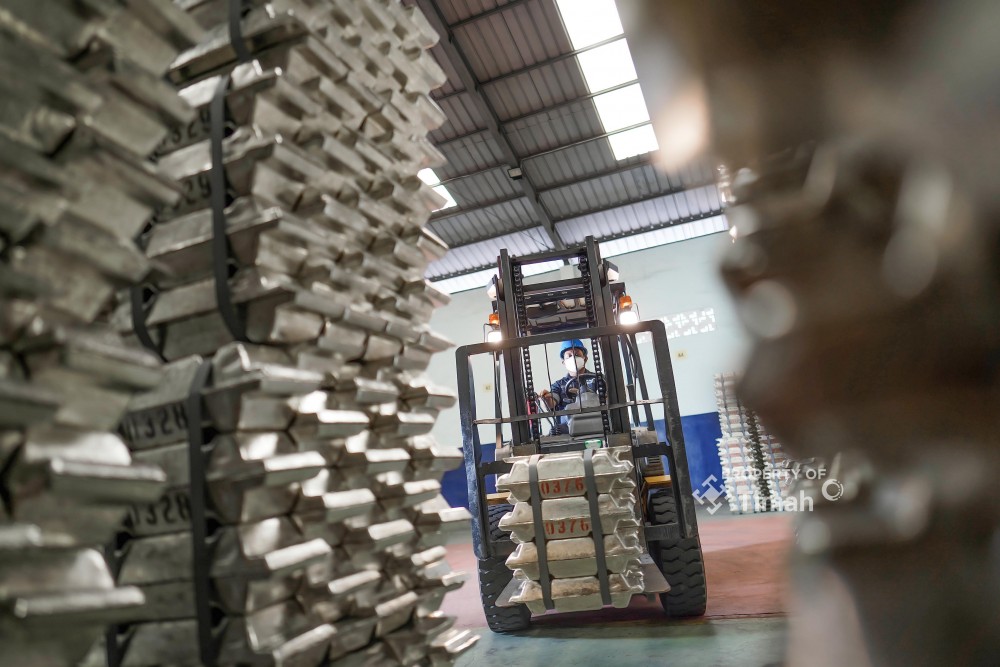
PT Timah Tbk (TINS) kicked off its 2026 fiscal year performance by posting profit growth of over 100%, driven by the upward trend in tin commodity prices.The Director of Production and Commercial at TINS, Ilhamsyah Mahendra, stated that while tin prices are still fluctuating, the recent direction of movement has shown a strengthening trend.Inevitably, this condition has had a direct impact on increasing sales, operational performance, and TINS's net profit in January 2026. Regarding sales and operating performance, Ilham mentioned that the company's achievements in January 2026 have exceeded targets.“The rise in commodity prices also drove significant net profit growth in January, over 100% of what we had planned,” Ilhamsyah said in an official statement on Friday (Feb 27, 2026).Referring to Trading Economics data, the tin commodity price stood at USD 53,698 per ton, up USD 3,398 or equivalent to 6.75% daily and 15.33% over the past week. Tin prices are projected to end at a level of USD 46,206 by the end of the first quarter of this year.Tin Price Estimates according to TINSIlham expects global tin price movements to range between USD 45,000–48,000 per ton until the first quarter of 2026. This will serve as a major catalyst for the strengthening of TINS's performance.Although analysts predict that prices will continue to fluctuate, Ilham noted that this positive momentum must be maximized. This is because the strengthening of tin prices is inseparable from global fundamental factors.“Demand from technology sectors such as Artificial Intelligence (AI), semiconductors, and data center construction has increased rapidly in the last two years,” Ilham explained.On the other hand, supply growth has remained relatively stagnant, creating a deficit between demand and supply. This situation has triggered a significant increase in tin prices on the global market while simultaneously boosting the performance of TINS as a tin producer.“So the demand deficit is growing quite rapidly, while the supply is somewhat stagnant. This has become one of the key drivers for prices growing quite significantly,” Ilham clarified.This year, the member of the State-Owned Mining Industry Holding (MIND ID) targets a production of 30,000 metric tons. In this context, Ilham revealed that TINS will take aggressive steps ranging from technology optimization and efficiency improvements to strengthening internal and external collaboration."We are quite optimistic because, in addition to the positive price trend, internal consolidation and communication with stakeholders—especially regarding regulation—is much better, so all sides are supporting the operational performance of PT Timah," he concluded.

New IDR 1.7 Trillion Container Port to Boost Nickel Industry Growth in Bone
24 Feb 2026, 01:42 AM 1251

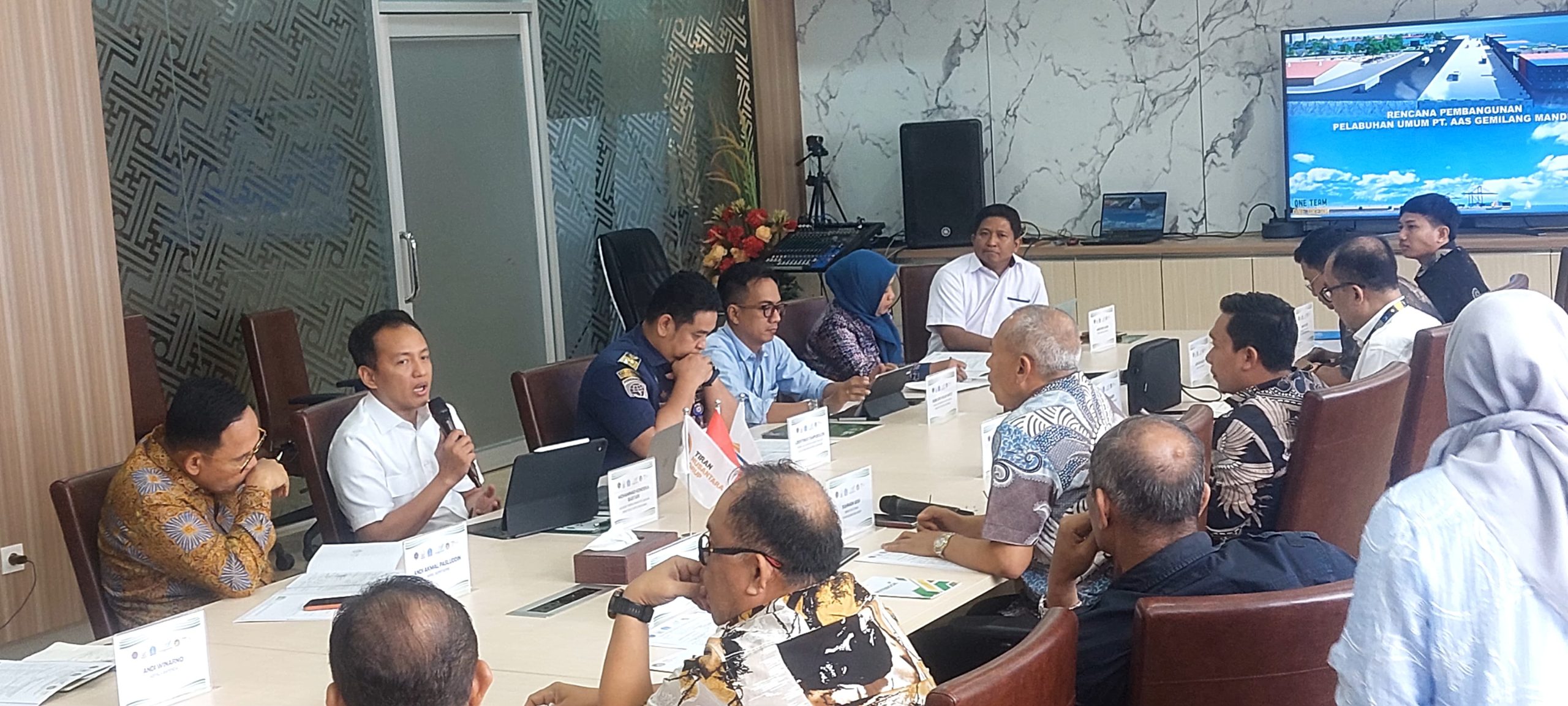
The Vice Regent of Bone, Andi Akmal Pasluddin, attended an audience with the Tiran Nusantara Group at the 3rd Floor Meeting Room of the AAS Building, Urip Sumoharjo Street, Makassar, South Sulawesi, on Thursday (Feb 19, 2026).The meeting discussed the construction plan for a public port in Bone Pute Village, Tonra District, Bone Regency.The Bone Regency Government delegation was received directly by the President Director of Tiran Nusantara Group, Rahman Arif. He presented various aspects related to the port construction plan, ranging from regional potential and the readiness of supporting infrastructure to the projected economic impact on the community.The strategic project, with an investment value reaching IDR 1.7 trillion to be built by PT AAS Gemilang Mandiri, is projected to become a new logistics hub supporting the nickel industry.In addition, the construction of the port is estimated to be capable of absorbing thousands of workers and driving economic growth in the region.The Vice Regent of Bone, Andi Akmal Pasluddin, emphasized that the readiness of basic infrastructure, particularly road access to the port location, is a crucial factor in supporting smooth construction and port operations in the future.He stated that the Bone Regency Government, in principle, supports every strategic investment that provides a positive impact on the region, especially in driving economic growth, creating job opportunities, and improving connectivity and trade activities, particularly in coastal areas.According to him, the existence of the Tonra Container Port is expected to become an economic engine for the eastern region of Bone Regency. In addition to creating new job opportunities, the port is also considered a way to streamline the distribution of goods, agricultural products, and other commodities.However, the Vice Regent of Bone also reminded of the importance of paying attention to environmental aspects and building strong synergy between investors and the local government so that development can proceed sustainably.The meeting was also attended by the Acting Regional Secretary of Bone, Assistant III of the Bone Regional Secretariat, the Acting Head of the Bone Community Empowerment Village Office (PMD), the Head of the Bone Highways, Housing, and Spatial Planning Office, the Head of the Bone Agriculture Office, the Head of the Legal Bureau of the Bone Regional Secretariat, and other relevant officials.Additionally, representatives from the Directorate General of Sea Transportation of the Indonesian Ministry of Transportation, the South Sulawesi Provincial Government, and the Makassar Primary Port Authority and Harbormaster (KSOP) were present to provide technical input regarding infrastructure readiness and regional spatial planning.This audience is expected to be the first step in establishing cooperation between the Bone Regency Government and investors to realize the construction of a productive port that supports economic growth and provides sustainable benefits for the community.The activity concluded with the presentation of commemorative plaques as a symbol of appreciation and gratitude between the Bone Regency Government and Tiran Nusantara Group for the successful meeting.

BUMA Secures Contract with Adaro for South Tutupan through 2030
23 Feb 2026, 02:04 AM 1354

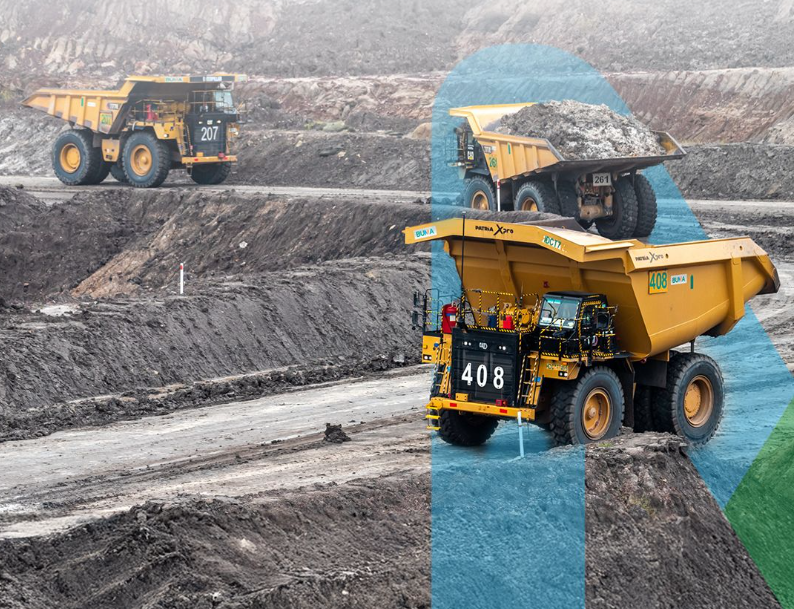
PT Bukit Makmur Mandiri Utama (BUMA), the principal subsidiary of PT BUMA Internasional Grup Tbk, has announced a long-term contract with PT Adaro Indonesia. The contract, effective from April 1, 2026 through December 31, 2030, secures BUMA’s operations at the South Tutupan Mine in Tanjung Tabalong, South Kalimantan.Under the contract, subject to the terms and conditions contained therein, BUMA is expected to deliver around 239 million bank cubic metres (bcm) of overburden removal and 44 Mt of coal, equivalent to average annual volumes of 50.5 million bcm and 9.3 Mt, respectively. The contract reinforces BUMA’s long-standing partnership spanning over 20 years with Adaro, while strengthening the Group’s contracted revenue base and long-term earnings visibility.Ronald Sutardja, President Director of PT Bukit Makmur Mandiri Utama, stated: “We are pleased to announce this significant contract with Adaro Indonesia, one of our valued long-term partners. The contract is a testament to BUMA’s consistent operational delivery and our ability to manage technically complex mining operations safely and reliably. It strengthens our contracted earnings visibility and reinforces our position as Indonesia’s trusted mining services partner.”In parallel with its operational activities, BUMA says it is deeply committed to empowering local communities in the Tabalong through programs focusing on education, health, environmental protection, and socio-cultural initiatives. Key initiatives include the JIKAMAKA computer skills workshop, Youth Broadcasting Class for creative industry development, the Kampung Iklim environmental program, and support for local small and medium enterprises (UMKM).These efforts have earned recognition from the South Kalimantan Provincial Government for environmental contributions, appreciation from the Tabalong Regent for advancing the Adipura initiative and UMKM development, as well as commendation from the Tabalong Youth Community and the Regent for consistent support of youth and community development programs.“Our partnership with Adaro Indonesia extends beyond operational delivery to creating shared value for local communities. We are proud of the positive social impact we have created together and will continue investing in the community’s long-term prosperity,” Sutardja concluded.

PT Vale Indonesia Posts 2.2 Million Tons of Nickel Ore Sales in Morowali in Early 2026
22 Feb 2026, 01:32 AM 1692

PT Vale Indonesia Tbk, through the Indonesia Growth Project (IGP) Morowali, recorded production and sales reaching 2.2 million tons of ore in Morowali.This achievement at the beginning of this year demonstrates the company's operational resilience amidst commodity price pressures and global supply chain challenges.This figure represents execution discipline and meticulous planning across all operational lines of this MIND ID holding member company.The Director and Chief Project Officer of PT Vale Indonesia, Muhammad Asril, stated that these results are the fruit of collective collaboration across all elements of the company."The achievement of 2.2 million tons in ore sales at the start of this year is the result of collaboration and shared commitment," said Asril.He also expressed appreciation to employees, business partners, and the government for providing full support for smooth operations.In addition to production aspects, the company continues to prioritize responsible mining principles by maintaining occupational safety and environmental protection.As of the end of January 2026, the company has completed hydroseeding across 16 hectares and built a nursery facility with a capacity of 400,000 seedlings per year.The Head of Mine Operation Bahodopi at PT Vale Indonesia, Wafir, added that this achievement is evidence of the project's readiness to maintain long-term stability."This success is the result of strengthening operational systems, integrated mine planning, and solid coordination," Wafir explained.Company management continues to optimize mine planning and increase equipment productivity to face competition in the nickel industry.

Harta Djaya Karya (MEJA) Moves Forward with Coal Mine Acquisition Plan for Q3 2026
20 Feb 2026, 01:53 AM 1714

PT Harta Djaya Karya Tbk (MEJA) is preparing for a major expansion into the mining sector through a planned acquisition of a 45% stake in PT Trimitra Coal Perkasa (TCP). The transaction value is estimated to reach IDR 1.6 trillion, equivalent to approximately 15 times the company's total assets as of June 2025, which were recorded at IDR 107.08 billion.In a response letter to the Indonesia Stock Exchange (IDX) dated February 13, 2026, the management of HDK outlined the background and projections of this corporate action plan.The acquisition value of IDR 1.6 trillion refers to an initial agreement based on previous similar transactions with other parties. Although the value significantly exceeds the company's current total assets, management stated that the figure is still subject to change following the valuation results from a Public Appraisal Service Office (KJPP), which is currently in the process of being appointed."The Company believes that the acquisition of a 45% ownership stake in TCP will provide concrete valuation benefits to the Company and its shareholders," wrote the President Director of HDK, Richie Adrian Hartanto S, in the information disclosure.PT Trimitra Coal Perkasa (TCP) is a coal mining company that holds a concession in South Sumatra covering an area of approximately 11,640 hectares.Standby Buyer Already SecuredBased on a report from South African independent consultant Faan Grobelaar & Associates, TCP's estimated mineable coal resources reach approximately 693.7 million tons. The company is targeted to begin production in 2026 and has secured a standby buyer, Argo Energy Pte. Ltd.—part of the Banpu Group—with a one-year contract.The company stated that the acquisition will be carried out through a share swap mechanism or share inbreng (contribution in kind) in stages, adjusted to the progress of TCP's production. The initial stage of the transaction is targeted for realization in the third quarter of 2026.Structure and Valuation SchemeResponding to issues regarding potential reverse acquisition or backdoor listing, management ensured that this transaction would not change the company's controlling structure. HDK's controlling shareholders are said to maintain control post-acquisition.In determining the valuation, HDK utilized the Discounted Cash Flow (DCF) approach, which is considered more conservative as it is based on operational performance projections and does not depend on stock price fluctuations. The projection uses a coal selling price assumption of USD 26 per ton, lower than the price range informed by TCP, which is USD 28–32 per ton.This expansion plan represents a strategic transformation step for HDK, moving from its current business scale toward the ownership of large-scale natural resource assets within the next year.

US to Collaborate in Indonesia’s Rare Earth Development from Upstream to Downstream
20 Feb 2026, 01:27 AM 2840

The governments of Indonesia and the United States (US) will collaborate on the management of critical minerals, including rare earth elements (REE), spanning from upstream to downstream sectors.This was outlined as one of the points in the reciprocal tariff agreement between Indonesia and the US, recently signed by the two heads of state: Indonesian President Prabowo Subianto and US President Donald Trump.In a document released by the White House on Thursday (Feb 19, 2026) local time, it was explained that Indonesia will remove export restrictions on industrial commodities to the US, including critical minerals.Furthermore, Indonesia and the US will accelerate cooperation in the development, processing, and downstream production of critical minerals based on commercial considerations.“To strengthen supply chain connectivity between the two parties, Indonesia will remove export restrictions on industrial commodities to the United States, including critical minerals,” as stated in the US-RI tariff agreement document on Friday (Feb 20, 2026).Supply ChainIt was explained that Indonesia will cooperate in the efficient development of the rare earth and critical minerals sector alongside US companies to ensure a secure and diverse supply chain.Indonesia will also provide greater certainty for companies involved in critical mineral extraction, as well as create business certainty to increase production capacity and operational growth.“Indonesia and the United States are committed to continuing cooperation and engagement in the critical minerals supply chain,” the White House wrote.In a press conference following the signing of the agreement, the Coordinating Minister for Economic Affairs, Airlangga Hartarto, stated that the cooperation pertains to essential minerals or industrial metals.He claimed that the critical mineral cooperation being carried out will extend to secondary processing stages.Regarding this matter, Airlangga emphasized that Indonesia is open to cooperation in investment and technology for the development of critical minerals and REE.“Critical minerals are related to industrial minerals, meaning there is a secondary process, and Indonesia is open to investment and technology cooperation for both critical minerals and rare earth elements,” Airlangga said in an online press conference on Friday (Feb 20, 2026).On the sidelines of the Indonesian government delegation's visit to Washington D.C. the previous day, Prabowo invited US investors to invest in Indonesia’s vital mineral industry sector.This was expressed during the US-ASEAN Business Council (USABC), the U.S. Chamber of Commerce (USCC), and the United States-Indonesia Society (USINDO) in Washington D.C. on Wednesday (Feb 18, 2026) local time.In his speech, Prabowo emphasized that Indonesia is open to global investment and ready to be a strategic partner for US companies.According to him, Indonesia possesses critical mineral reserves highly needed for the development of new technologies, including rare earth metals and nickel for electric vehicle (EV) batteries."Indonesia is open to investment. We have critical minerals vital for new technologies, including large rare earth reserves. We want US companies to make Indonesia not just a market, but a strategic production base," Prabowo said on Thursday (Feb 19, 2026).Meanwhile, the Ministry of Energy and Mineral Resources (ESDM) asserted that Indonesia will not export raw mineral ores or critical mineral ores to the US, provided that the regulations prohibiting it remain in effect.In this case, the regulation is Law No. 3/2020 concerning Mineral and Coal Mining (UU Minerba), which regulates the ban on raw commodity exports and mandates domestic processing to increase added value.The Director General of Minerals and Coal at the Ministry of ESDM, Tri Winarno, stated that the law confirmed raw materials could no longer be exported from Indonesia since 2023, or three years after the regulation was enacted.Thus, if a policy requiring the export of raw materials from the country arises in the future, the law would need to be revised. However, Tri emphasized that the government has no plans to revise that rule.“In our law, it is explained—Law No. 3/2020—that raw material exports stop three years after enactment. It was enacted in 2020, which means by 2023 it was finished,” Tri told reporters at the Ministry of ESDM Office, Thursday (July 24, 2025).Separately, the Secretary General of ESDM for 2023–2025, Dadan Kusdiana, also ensured there would be no changes to critical mineral export regulations to the US despite the tariff agreement.He said the agreement with the US does not contain rules allowing the export of unprocessed critical minerals or ore; instead, they must be processed first through downstreaming.“If the sentence is read in full, it is for processed minerals, all industrial commodities. So, it is not raw ore export. This is in line with the government's downstreaming program,” Dadan said when confirmed by Bloomberg Technoz, Wednesday (July 23, 2025).

Advertisement


Get Your Pass