EMAS Allocates IDR 143.75 Billion for New Asset Purchases
14 Jun 2026, 10:53 AM 136

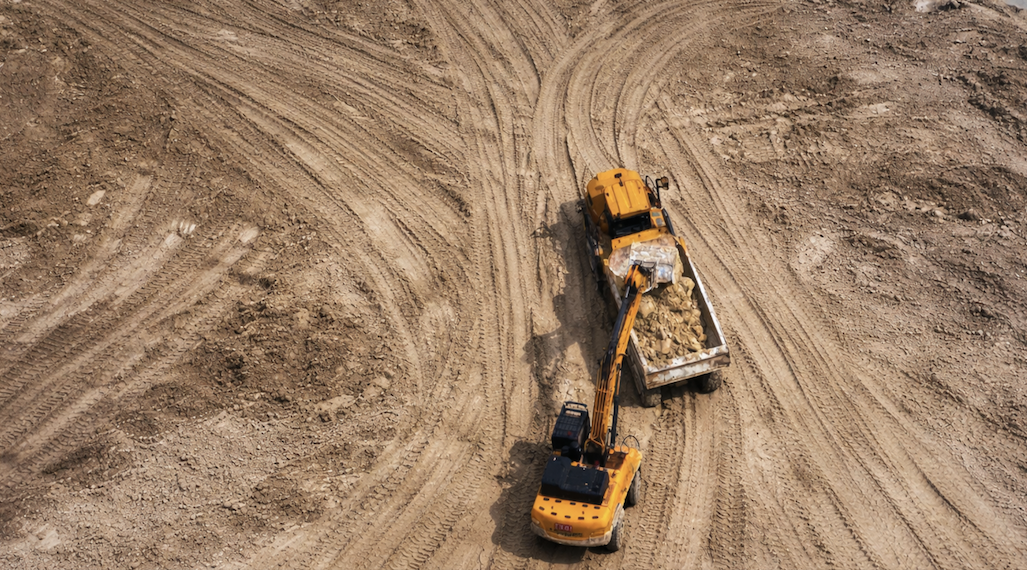
PT Merdeka Gold Resources Tbk (EMAS) has recently completed a major corporate action.The mining company spent IDR 143.75 billion to acquire used heavy equipment assets. The capital expenditure transaction involved several affiliated entities under the Merdeka Group.Merdeka Gold Resources Corporate Secretary Adi Adriansyah Sjoekri provided a detailed official explanation. He said the asset acquisition was fully executed through subsidiary PT Merdeka Mining Indonesia (MMI). The affiliated-party transaction became effective on June 10, 2026.“The transaction between MMI and affiliated parties is expected to directly improve operational efficiency. This structured step is considered appropriate in conducting business activities effectively,” Adi said in an information disclosure document, as quoted on Sunday, June 14, 2026.The asset sellers were PT Bumi Suksesindo (BSI) and PT Batutua Tembaga Raya (BTR). Both companies are affiliated entities of the EMAS-listed company. The internal transaction was deemed free of any conflict of interest.The gross purchase value from each affiliated entity differed. MMI spent IDR 44.48 billion to acquire heavy equipment from BSI. Meanwhile, the value of the asset acquisition from BTR reached IDR 99.27 billion.The assets acquired include used heavy equipment, industrial machinery, and additional spare parts. Management said all capital goods were purchased on an as-is basis without additional warranties. The consolidated assets will be fully utilized by MMI.Adi emphasized that the asset transfer is intended to meet the operational requirements of the Pani Gold Project.“The transaction was conducted fairly and in accordance with generally accepted business practices. This policy provides greater effectiveness compared with conducting transactions with external parties,” Adi said.EMAS Shares RiseNews of the completion of the mining fleet expansion was immediately met with a positive response from the domestic stock market.EMAS shares ended the week firmly in positive territory. The stock price increase occurred at the close of trading on Friday, June 12, 2026.Trading data showed that the mining company's shares rose by 75 points. The gain was equivalent to a daily increase of 1.09%. EMAS shares closed at IDR 6,975 per share.Trading in EMAS shares remained relatively volatile throughout the session. The stock opened at IDR 7,050 and at one point climbed to an intraday high of IDR 7,150 per share.Despite the gains, selling pressure briefly pushed the stock lower. The intraday low was recorded at IDR 6,875. On a cumulative basis, the average transaction price stood at IDR 6,980 per share.Trading activity in EMAS shares was highly liquid and attracted strong investor interest. The stock changed hands 14,080 times during the session. Total trading volume reached 280,500 lots.Strong market enthusiasm was also reflected in the total value of transactions. The stock recorded a transaction value of IDR 195.79 billion. The statistics underscored the strong appeal of the mining company's fundamentals among investors.Although the stock closed higher, foreign investors adopted a net-selling strategy. Exchange data showed that foreign investors recorded gross sales of IDR 85.25 billion. Meanwhile, total gross purchases by foreign investors amounted to only IDR 55.72 billion.The gap ultimately resulted in net foreign selling during the session. Net foreign outflows from EMAS shares reached IDR 29.52 billion.

PTAR Drives Greener Operations at Martabe Gold Mine with Seven Energy Innovations
13 Jun 2026, 10:54 AM 118

PT Agincourt Resources (PTAR) has demonstrated that large-scale mining operations can coexist with environmental sustainability.The statement was provided by the company following a webinar titled "Clean Energy Goes Viral: Gen-Z in the Energy Transition" which was sponsored in part by PT Agincourt Resources, on Saturday (13/6/2026).According to the company, PTAR has implemented various advanced technologies to significantly reduce carbon emissions and improve energy efficiency. The company has introduced seven key green initiatives aimed at supporting environmental sustainability.First, since 2022, PTAR has utilized solar energy through the installation of a 2.0-megawatt-peak (MWp) solar photovoltaic (PV) system. Using an on-grid rooftop system, the solar panels are installed across 42 buildings covering the highland area, lowland area, and employee housing facilities.Second, PTAR has adopted environmentally friendly heavy equipment in the form of the Komatsu HB365-1 excavator. Through the hybrid technology developed in collaboration between PT United Tractors Tbk and Komatsu, fuel consumption has been reduced by up to 17%, while carbon emissions have declined by 13 kilograms per hour.Third, in support of Indonesia’s clean energy transition, PTAR has utilized 275,000 Renewable Energy Certificates (RECs) issued by PLN. The amount is equivalent to 275 megawatt-hours (MWh) of electricity generated from renewable energy sources.Fourth, PTAR has reduced its dependence on fossil fuels by transitioning to B40 fuel, a blend of 40% biodiesel and 60% diesel. The initiative has helped lower greenhouse gas emissions from the mine’s operational vehicles.Fifth, in its processing operations, PTAR has installed a Slip Energy Recovery (SER) system. The technology captures and regenerates electrical energy that would otherwise be lost, allowing it to be reused. The system has the potential to reduce energy consumption in processing activities by 6.49% per month.Sixth, the company has significantly improved energy efficiency in its ore crushing operations through the use of Closed-Loop Energy Reclamation technology equipped with Intelligent Torque Control (ITC).The technology adjusts grinding speed according to the hardness of the ore while simultaneously recovering wasted thermal energy. As a result, electricity consumption has been reduced by 4,931 gigajoules (GJ).Seventh, PTAR recycles used lubricating oil through Hypobaric Fraction Separator technology. Through a process involving heating, filtration, low-pressure separation, and cooling, the used oil is converted into a substitute fuel for blasting operations.The program has replaced diesel fuel consumption by utilizing 80% of the waste oil generated. Over the course of a year, PTAR processed 155.25 tons of used oil, equivalent to reducing potential global warming emissions by 441,975.09 tons of CO2 equivalent.Through a combination of solar energy utilization, hybrid technology, machine intelligence, and used-oil recycling, PTAR says it has demonstrated that gold mining operations can evolve into a cleaner, more efficient, and more responsible industry for the future.

PT Timah to Mine at Depths of Up to 80 Meters
12 Jun 2026, 10:53 AM 127

PT Timah Tbk (TINS) plans to conduct exploration and tin ore mining in deep-sea areas at depths of up to 80 meters as part of efforts to discover new reserves. The move comes as alluvial, or near-surface, deposits that have long served as the company's primary source of production continue to decline.TINS Director of Corporate Strategy and Business Development Harry Budi Sidharta said the company is currently refining the use of new technologies to support its offshore mining activities. According to him, expanding mining operations into deeper areas has become a key priority to maintain the sustainability of national tin production.“As our alluvial reserves continue to decline, we will move into deep alluvial and primary deposit exploration. That will be the main focus of our exploration activities,” he said during a press conference following the company’s 2025 Annual General Meeting of Shareholders in Jakarta on Friday (12/6/2026).The deep-sea mining operations will be supported by a new fleet of vessels specifically designed to reach deposits located further beneath the seabed. Currently, the company’s offshore mining activities are conducted at depths of around 50 meters, but it is seeking to extend operations into more prospective areas.“In offshore mining, we will also need new vessels because we may mine deeper than the current average depth of around 50 meters, potentially reaching depths of up to 80 meters below the sea surface. We are working to identify new equipment with better prospects,” he added.In addition to strengthening its offshore mining operations, TINS is also exploring the development of primary mining projects on land. Unlike alluvial mining, primary mining requires more complex mineral processing technologies because the tin ore is embedded in hard rock formations.“On the production side, new primary mining operations will require different mining technologies. The ore is much finer and contained within rock formations, which must first be crushed into very fine particles before the minerals can be separated,” he said.Remaining ReservesPreviously, TINS Director of Production and Commercial Operations Ilhamsyah Mahendra said the company is intensifying exploration activities to secure long-term resource availability. He stressed that adding new reserves has become a priority to ensure the sustainability of the company’s business.“Starting with exploration, we are now carrying out aggressive exploration activities. This is one of PT Timah’s key priorities. We need to secure resource deposits and reserves. Currently, we have around 800,000 tonnes of resources and about 300,000 tonnes of reserves. We need a longer mine life,” as quoted on Thursday (4/6/2026).The company believes its current reserves are not sufficient when measured against its ambition to maintain a leading position in the global market over the long term. To accelerate the discovery of new reserves, the MIND ID mining holding member has begun relying on digital mapping technology and aerial monitoring across its concession areas.“I think those figures are only sufficient for 10 to 15 years. We need significantly more deposits to support operations for more than a hundred years. We are also supported by various technologies in our exploration activities, including GIS platforms and drone surveys, to improve exploration accuracy and reduce the time required,” he added.Meanwhile, the company is also exploring opportunities for overseas expansion in search of strategic mining assets. The strategy is intended to reduce reliance on domestic resources while strengthening Indonesia’s position in the global critical minerals supply chain.“We are now looking at global expansion, not only expanding our refining capacity but also seeking mining assets outside Indonesia. We are very open to partnerships and collaborations with global tin companies,” he said.

Ministry of Energy and Mineral Resources Approves 664 Mineral and Coal Mining RKAB
12 Jun 2026, 08:51 AM 292

Indonesia’s Ministry of Energy and Mineral Resources (ESDM) has approved 664 Work Plans and Budget Documents (RKAB) submitted by mining companies as of June 12, 2026.The ministry said the approval process was carried out in a professional, transparent, and accountable manner to ensure mining activities comply with regulations and support the sustainable management of mineral and coal resources.“As of June 12, 2026, the Directorate General of Minerals and Coal at the Ministry of Energy and Mineral Resources has approved 664 RKABs for 2026. Meanwhile, a number of other applications remain under evaluation, subject to the completeness of documents and fulfillment of applicable requirements,” Director General of Minerals and Coal Tri Winarno said in a written statement on Friday (12/6/2026).Tri emphasized the importance of meeting licensing requirements and regulatory obligations before mining operations can commence. He noted that mining activities cannot be conducted solely on the basis of holding a Mining Business License (IUP).Mining companies are also required to prepare clear operational plans and comply with technical, environmental, safety, and state revenue obligations before receiving approval to begin operations.“Every mining activity must have a legal basis, clear planning, and comply with all applicable regulations. Therefore, the government conducts a comprehensive evaluation of the various requirements that form part of mining governance,” Tri said.Under Article 111 of Law No. 3/2020 on Mineral and Coal Mining, the RKAB is a mandatory document for holders of Mining Business Licenses (IUP) and Special Mining Business Licenses (IUPK). It outlines mining business plans covering operational, technical, financial, and environmental aspects.The RKAB serves as a reference for companies in carrying out mining activities during exploration, production operations, processing and refining, as well as post-mining activities. As such, every RKAB submission must undergo an evaluation process before receiving government approval. The entire submission, evaluation, and approval process is conducted online through the integrated MinerbaOne information system.As part of the evaluation process, the Directorate General of Minerals and Coal reviews a range of factors, including administrative completeness and licensing legality, compliance of mining plans with Good Mining Practice principles, fulfillment of environmental obligations including reclamation guarantees, mining safety standards, and the company’s ability to meet state revenue obligations.“We continue to review and evaluate submitted documents to ensure mining activities proceed according to plan and adhere to good mining governance principles. Approval is granted only after all required aspects are deemed compliant with prevailing regulations,” Tri said.The RKAB framework has been strengthened through Government Regulation No. 39/2025 and ESDM Ministerial Regulation No. 17/2025. All RKAB submissions are now processed electronically through the integrated e-RKAB system as part of the government’s digital transformation of mineral and coal governance.Under the new policy, the RKAB matrix has been streamlined to three matrices for the exploration stage and ten matrices for the production operation stage. The simplification aims to reduce administrative burdens without compromising oversight of mining safety, non-tax state revenue (PNBP) obligations, mining services utilization, community development and empowerment (PPM), and reclamation requirements.“Matrices that are no longer in use have been incorporated into periodic realization reporting matrices that companies are required to submit regularly,” Tri added.

ANTAM Aims to Become Key Player in Indonesia’s Nickel Downstreaming
11 Jun 2026, 10:54 AM 129

Indonesia's downstreaming, or industrialization, policy for mineral and coal commodities is gaining traction, as reflected in the growing contribution of the processing industry relative to the mining sector.The Directorate General of Minerals and Coal at the Ministry of Energy and Mineral Resources (ESDM) reported that non-tax state revenue (PNBP) from the mineral and coal sector reached IDR 48.95 trillion during the January-April 2026 period. The data indicates that the mineral downstreaming program has contributed to higher state revenue.As of May 15, 2026, the figure had increased to around IDR 56 trillion, representing annual growth of 6.21%. Behind this achievement, several smelters within the MIND ID ecosystem have become key drivers of Indonesia’s mineral processing industry, including PT Aneka Tambang Tbk (ANTM).ANTAM President Director Untung Budiharto said the company remains committed to carrying out special assignments from the government aimed at accelerating the nickel downstreaming program and the development of Indonesia's electric vehicle battery ecosystem.“Through various integrated strategic projects, ANTAM is not only increasing value-added output but also supporting the strengthening of national industrial self-sufficiency and Indonesia’s position in the global industrial supply chain,” he said on Thursday (11/6/2026).The assignment covers the development of an integrated nickel-based battery ecosystem from upstream to downstream, including mining activities, the construction of RKEF/RKSBF plants, HPAL facilities, refineries, precursor and cathode plants, battery cell manufacturing facilities, and battery recycling facilities.The project will be implemented through a partnership between ANTAM and PT Industri Baterai Indonesia (IBI) together with HYD Investment Limited, a consortium comprising Zhejiang Huayou Cobalt Co., Ltd., EVE Energy Co., Ltd., and PT Daaz Bara Lestari Tbk., as strategic partners in developing Indonesia’s integrated electric vehicle battery ecosystem.“The development of this ecosystem is expected to increase the value-added of the nation’s mineral resources, expand the company’s revenue streams, strengthen long-term business resilience, and support sustainable growth for all stakeholders,” Untung said.Throughout 2025, ANTAM's nickel ore production reached 16.11 million wet metric tons (wmt), up 62% from 9.94 million wmt recorded in FY2024. On the sales side, nickel ore sales totaled 14.58 million wmt, representing growth of 75% compared with 8.35 million wmt in 2024.Supported by rising domestic demand, 2025 marked ANTAM's highest nickel ore production and sales performance in more than a decade since the implementation of Indonesia's mineral export ban.Meanwhile, despite regulatory challenges throughout 2025, ANTAM maintained stable ferronickel operations, recording production of 16,064 tons of nickel in ferronickel (TNi) and sales volume of 10,528 TNi.

Freeport Smelter to Resume Operations in Third Quarter of 2026, Reach Full Capacity in 2027
10 Jun 2026, 08:53 AM 160

PT Freeport Indonesia (PTFI) is targeting the resumption of operations at its copper cathode smelter in the Java Integrated Industrial and Port Estate (JIIPE) in Manyar, Gresik, East Java, in the third quarter of 2026.The company had previously aimed to restart the Manyar smelter in the second quarter of 2026 after operations were suspended due to reduced concentrate supply from the Grasberg Block Cave (GBC) underground mine.PTFI President Director Tony Wenas said the smelter is expected to restart in the third quarter of 2026 and gradually increase production capacity in line with ongoing recovery efforts at the GBC underground mine.“The ramp-up will begin in the third quarter, depending on concentrate availability. Full operations will follow the same timeline as GBC. The smelter can only operate at full capacity once concentrate supply returns to normal,” Tony told reporters at the House of Representatives complex on Wednesday.During the same occasion, Tony said the GBC underground mine is expected to return to 100% operational capacity by the end of 2027 following remediation work after a landslide disrupted operations.The company targets the mine's recovery to reach 65% capacity in the second half of 2026 and 75% in the first half of 2027.“In the second half of this year, we expect to reach 65%. In the first half of next year, it should reach 75%, and by the end of the year we are targeting close to 100%,” Tony said.Previously, Tony explained that utilization rates at the Manyar smelter had reached 70% in August 2025 before production was halted following the landslide at GBC in early September 2025.“The new smelter in Manyar, Gresik, will remain offline through the end of the year. The plan is to resume production in the second quarter of 2026,” Tony said during a hearing with the House of Representatives’ Commission VI on November 24, 2025.Meanwhile, two of Freeport’s underground mines — Big Gossan and the Deep Mill Level Zone (DMLZ) — have resumed operations.The two mines currently produce around 70,000 tonnes of concentrate per day, equivalent to approximately 30% of Freeport’s total mining capacity of 210,000 tonnes per day.Tony said all concentrate produced by the two mines is being supplied to PT Smelting’s facility in Gresik, East Java.The Manyar smelter, meanwhile, is currently processing anode slime, a byproduct generated by PT Smelting. The material is refined to extract gold, silver, and other associated minerals.Freeport’s first smelter, PT Smelting, was established in 1996 through a partnership with a Japanese consortium and is operated by Mitsubishi. Located in Gresik, East Java, it was Indonesia’s first copper smelter.PT Smelting is capable of processing 1 million tonnes of copper concentrate annually into 300,000 tonnes of copper cathodes to meet domestic and export demand.Freeport’s second smelter is located within the JIIPE industrial estate in Manyar, Gresik. Construction began in October 2021 but was delayed by the Covid-19 pandemic before the facility was officially inaugurated on June 27, 2024.The facility is the world’s largest single-line copper cathode smelter by design and is capable of processing up to 1.7 million tonnes of copper concentrate annually once fully operational.The smelter is equipped with a refinery unit, precious metals refinery, oxygen plant, sulfuric acid plant, desalination facility, and effluent and wastewater treatment systems to maximize the utilization of raw materials, byproducts, and waste while achieving a highly efficient smelting and refining process.However, less than three weeks after its inauguration, the smelter suffered a fire incident that forced the company to suspend production and undertake repairs.Following the incident, the government granted Freeport permission to continue exporting copper concentrate in 2025. The export permit was valid for six months, from March 17, 2025, to September 16, 2025.

BUMI Builds the Foundation for Coal Downstreaming
05 Jun 2026, 09:51 AM 262

PT Bumi Resources Tbk (BUMI) is preparing a new strategic financing initiative through a planned bond issuance, with one of the key allocations amounting to IDR 1.5 trillion earmarked for its subsidiary, PT Arutmin Indonesia.BUMI's management said the funds will be used to support Arutmin's operational sustainability, including requirements related to the extension of its mining business licenses and compliance with the government's coal downstreaming policy.The downstreaming initiative forms part of BUMI's long-term strategy to develop higher-value-added businesses, including coal-to-methanol conversion projects. The coal gasification project is expected to require investment of approximately USD 2.5 billion, or around IDR 43 trillion, making access to financing a critical factor in its development.The planned facility is designed to produce around 2 million tons of methanol annually and will require approximately 7.7 million tons of low-calorific-value coal as feedstock. Groundbreaking is targeted for 2026, with commercial operations expected to commence in 2029.The project will be developed through PT Bumi Etam Chemical (BEC), a joint venture between Arutmin and PT Kaltim Prima Coal (KPC), both of which are part of the BUMI Group.Ryan Santoso, an analyst at Ciptadana Sekuritas, said the establishment of BEC demonstrates that BUMI's downstreaming agenda has moved into a more advanced and tangible stage."The loan from BUMI to Arutmin is an affiliated-party transaction that has a strong business rationale and remains aligned with the objective of creating added value for shareholders," Ryan said on Friday (June 5, 2026).According to Ryan, the funds are not intended solely to meet short-term operational requirements but are aimed at supporting the long-term sustainability of mining assets while preparing strategic projects that could unlock new growth drivers in the future."The intended use of proceeds is relatively clear. In addition to supporting the sustainability of the mining business, the funding also forms part of the preparation for downstream projects that have the potential to increase value-added output and diversify the group's revenue streams," he said.Ryan added that intercompany lending within a corporate group is a common financing practice because it offers flexibility and efficiency in capital management. Through such mechanisms, a parent company can allocate funding more quickly to meet the development needs of its subsidiaries.In his view, the move could also be interpreted as a signal that BUMI is gradually preparing a broader business transformation—from a company primarily known as a coal producer into a natural resources group with greater exposure to processing and downstream industries.

Tin Prices Surge 34%, Boosting Indonesia’s Tin Downstream Industry
04 Jun 2026, 04:28 PM 383

The sharp increase in global tin prices during the first quarter of 2026 has provided a positive boost for Indonesia’s tin industry and created new opportunities to accelerate downstream development within the country.The average Cash Settlement Price (CSP) for tin on the London Metal Exchange (LME) reached USD 48,679.68 per metric ton in the first quarter of 2026, representing a 34.7 percent increase from USD 36,134.37 per metric ton in the corresponding period last year.On the demand side, approximately 50 percent of global tin consumption continues to be driven by the solder segment, which is closely linked to the semiconductor and electronics industries. Demand prospects remain robust, supported by the rapid growth of artificial intelligence (AI), data center expansion, energy storage development, and ongoing investment in power infrastructure.According to the CRU Tin Monitor, global refined tin production totaled 90,645 tons in the first quarter of 2026, while consumption was estimated at 89,036 tons, indicating a relatively balanced market.Against this backdrop, PT Timah (Persero) Tbk (TINS), a member of state-owned mining holding company MIND ID, reported revenue of Rp5.47 trillion in the first quarter of 2026. The figure surged 160.5 percent from IDR 2.10 trillion recorded in the same period a year earlier.Lukman Leong, Chief Analyst at Doo Financial Futures, attributed the stronger performance to improving conditions in the global tin industry.“Tin sector performance has been supported by rising global tin prices, improved export activity, higher production levels, operational efficiencies, and lower cost burdens in several areas,” he said.Operationally, TINS produced 6,312 tons of tin ore (Sn) during the first quarter of 2026, an increase of 96 percent compared with 3,225 tons in the same period last year.Refined tin production also rose 82 percent to 5,630 metric tons of tin from 3,095 metric tons a year earlier. Meanwhile, tin metal sales climbed 113 percent to 6,009 metric tons, up from 2,824 tons in the first quarter of 2025.The company also recorded a significant increase in its average selling price for tin metal, which reached USD 49,221 per metric ton, up 51 percent from USD 32,495 per metric ton in the same period last year.Exports continued to dominate sales, accounting for 97 percent of total revenue. China remained the largest export destination, representing approximately 48 percent of the company’s overseas sales.Amid the stronger market environment, MIND ID has continued to promote the transformation of Indonesia’s tin industry through the expansion of downstream processing initiatives. Tin is no longer viewed solely as an export commodity but as a strategic resource for the development of higher-value industries.Expanding Downstream ProductsThe development of downstream products—including solder, tin chemicals, and electronic materials—has become a key focus area aimed at strengthening Indonesia’s position in global supply chains while increasing domestic value creation.Consolidating the National Tin IndustryAs the controlling shareholder of TINS with a 65 percent ownership stake, MIND ID serves as the consolidator of Indonesia’s tin industry, seeking to ensure that the country’s strategic resources are managed in an integrated manner from upstream mining activities through downstream processing and manufacturing.Through this strategy, downstream development is expected to strengthen the competitiveness of Indonesia’s tin industry while enhancing the mining sector’s contribution to the national economy.

Petrindo (CUAN) Targets Top Six Indonesian Coal Producers, Aims for 30 Million Tons Output by 2031
02 Jun 2026, 04:29 PM 409

PT Petrindo Jaya Kreasi (CUAN) continues to accelerate its expansion in the mining and energy sectors. Throughout 2025, the company, reported revenue of USD 1.21 billion, up 51.63% from USD 801.72 million in the previous year. The company's EBITDA also increased 24.49% to USD 404.62 million.Alongside its strong financial performance, Petrindo has intensified its transformation into an integrated mining and energy group through a planned acquisition of PT Singaraja Putra Tbk (SINI), a transaction being carried out through the company's affiliated entities, including PT Petrosea Tbk (PTRO).In December 2025, Petrindo, through its subsidiary PT Kreasi Jasa Persada and affiliated entities, indirectly acquired a 19.99% stake in SINI and is currently participating in the company's rights issue. Upon completion of all transactions, Petrindo and its affiliates are expected to hold at least a 29% ownership stake in SINI.The acquisition forms part of the company's long-term strategy to strengthen its asset base, expand its business network, and build an integrated mining and mining services group. On a technical basis, the combined coal reserves of the company and its subsidiaries are projected to reach approximately 378 million tons.Petrindo President Director Michael said the expansion alongside Singaraja Putra is expected to significantly increase the group's production capacity over the coming years."Through Petrindo's expansion together with its subsidiaries and Singaraja Putra, we project that production will gradually increase to exceed 30 million tons per year by 2031. This has the potential to position the group among Indonesia's six largest coal producers based on annual production volume," he said on June 2, 2026.According to the company, the strategic value of the transaction extends beyond additional reserves and higher production volumes. It is also expected to strengthen Petrindo's integrated business model, which combines resource ownership, Petrosea's operational capabilities, and logistics infrastructure capable of handling large-scale annual volumes.Under this model, increased production is expected to directly boost utilization rates across the group's mining roads, ports, and logistics facilities. The company said the synergy between mining assets and logistics infrastructure is a key driver of value creation throughout its mining business chain.Operationally, Petrindo and its subsidiaries also plan to expand mining road infrastructure to support all-weather road operations, deploy double-trailer hauling systems, and develop electric vehicle (EV) truck fleets to improve logistics efficiency and operational productivity.Through the acquisition of SINI, the company believes integration between mining assets, mining services, and logistics infrastructure will become increasingly robust within a single interconnected business platform.

Advertisement