ESDM Auctions 629,000 Tons of Bauxite Stockpile, Potential State Revenue Reaches IDR 200 Billion
16 Dec 2025, 04:59 AM 690

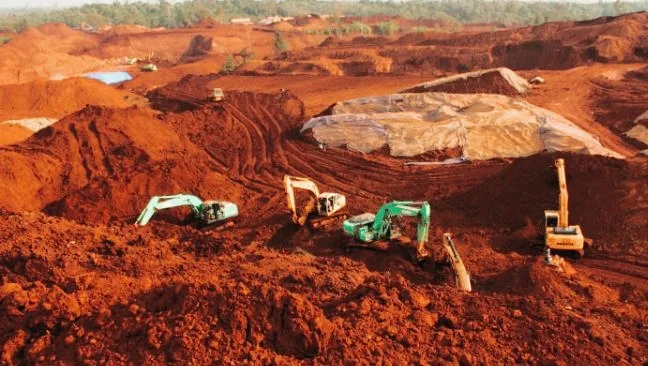
The Ministry of Energy and Mineral Resources (ESDM), through the Directorate General of Law Enforcement (Ditjen Gakkum), is auctioning state-controlled goods in the form of a stockpile of more than 629,000 metric tons (MT) of bauxite in the Riau Islands.Director General of ESDM Law Enforcement Jeffri Huwae explained that the bauxite auction will contribute more than IDR 200 billion to state revenue.Bids are open from 16–22 December 2025 and this marks the first bauxite stockpile auction conducted by the ESDM Ministry.After the bidding period ends, the auction winner will be determined at the State Assets and Auction Service Office (KPKNL) in Batam.He stated that the auction follows the mandate of Article 199J of Government Regulation No. 39/2025 on the Implementation of Mineral and Coal Mining Business Activities.“If additional mineral stockpiles are found—whether bauxite, coal, nickel, or other commodities—law enforcement will be carried out by designating the goods as State-Controlled Assets to be auctioned. The proceeds will become non-tax state revenue (PNBP) for the ESDM sector,” Jeffri said in a written statement on Tuesday (16/12/2025).With a potential IDR 200 billion boost to revenue, Jeffri is optimistic that the 2025 PNBP target of IDR 254 trillion can be met.He claimed the auction provides legal certainty for state-controlled goods originating from residual mining business activities.Jeffri emphasized that the auction will not only strengthen the sector’s contribution to the economy, but also serves as a form of transparency and accountability in natural resource management.“The process is fair and open, so we invite all qualified parties to participate in this auction,” Jeffri said.He also noted that the auction is being conducted by ESDM’s Ditjen Gakkum together with the Directorate General of State Assets (DJKN), the DJKN Regional Office for Riau, West Sumatra, and the Riau Islands, as well as KPKNL Batam.As a note, Indonesia’s bauxite production has declined year after year. According to ESDM data, bauxite output in 2024 reached 16.8 million tons, down from 19.8 million tons in 2023 and 31.8 million tons in 2022.Meanwhile, ESDM reports that Indonesia currently has 14 integrated mineral smelter projects with a total investment value of USD 8.69 billion (around IDR 144.02 trillion), dominated by the bauxite segment.There are six integrated bauxite smelter projects underway with a combined investment of USD 2.18 billion.The Director General of Minerals and Coal (Minerba) at ESDM, Tri Winarno, previously said that seven bauxite smelters remain stalled, with construction progress below 60%.The six integrated refining facilities include: PT Dinamika Sejahtera Mandiri located in Sanggau, West Kalimantan; PT Laman Mining in Ketapang, West Kalimantan; and PT Kalbar Bumi Perkasa located in Sanggau, West Kalimantan.There are also PT Parenggean Makmur Sejahtera in East Kotawaringin, Central Kalimantan; PT Persada Pratama Cemerlang in Sanggau, West Kalimantan; PT Quality Sukses Sejahtera in Pontianak, West Kalimantan; and PT Sumber Bumi Marau in Ketapang, West Kalimantan.“Kalbar Bumi Perkasa has had its permit revoked,” he said in a meeting with Commission XII of the Indonesian House of Representatives (DPR RI) on Wednesday (30/4/2025).

Far East Gold Confirms and Extends High-Grade Gold Zones at Sua Prospect
14 Dec 2025, 07:28 AM 797

Far East Gold Ltd (ASX:FEG) has confirmed and extended a high-grade gold zone at the Sua prospect within the Idenburg Contract of Work (CoW) in Papua, Indonesia, on the back of new assay results from drillholes KSD025 and KSD026.The two holes were drilled to follow up high-grade gold mineralisation reported in historical hole KSD008. Assays have now been received for four of the 10 holes completed by the company at Sua, with all 4 intersecting high-grade gold across multiple stacked quartz veins.KSD025 was drilled as a twin of historical hole KSD008, which returned 18.19 g/t gold over 6m from 106m, including 3m at 34.95 g/t gold from 106m. The new hole intersected several high-grade zones, including:▶3.16 g/t gold over 2m from 68m▶8.42 g/t gold over 7.7m from 106.3m, including 34.65 g/t gold over 0.7m from 106.3m▶26.43 g/t gold over 0.5m from 125m▶These results confirm the historical high-grade intercepts in KSD008 and identify an additional high-grade zone at depth that was not captured in the original hole.KSD026 was drilled approximately 50 metres down-dip of the KSD008/KSD025 section to test the continuity of the high-grade structure. The hole returned:▶8.82 g/t gold over 4.5m from 120 m, including 7.14 g/t gold over 1 m from 122 m and 51 g/t gold over 0.5m from 122.5m▶2.1 g/t gold over 12.5m from 132.5m, including 8.54 g/t gold over 2.1m from 135.9mMap showing prospect and resource areas within the Idenburg COW tenement. FEG drilling is currently in progress within the Sua and North Bermol prospect areas. The areas of announced PIPPIB forest reclassification are also indicated.The results demonstrate a down-dip extension of the high-grade zone intersected in KSD008 and KSD025. The mineralised structure remains open down-dip and along strike to the northeast.Gold mineralisation at Sua is hosted in a series of stacked milky-quartz ± sulphide veins, with more than 30 individual gold-bearing quartz veins mapped to date. The Sua vein system sits within the 5-kilometre-long Sua–Afley shear zone, highlighting substantial potential for further high-grade discoveries.“The high-grade intercepts in KSD025 and KSD026 build on the strong results from our first two holes, KSD023 and KSD024. KSD023 intersected coarse visible gold within a near-surface interval of 13.77 g/t Au over 9.8m, including 131 g/t Au over 0.8m, and KSD024 also intersected coarse visible gold within a near-surface interval of 35.5m at 8.59 g/t Au, including 280 g/t Au over 0.4m,” said FEG’s non-executive chairman, Justin Werner.“All four drillholes assayed to date from FEG’s current program at Sua include bonanza-grade intervals. Importantly, KSD025 intersected a deeper high-grade zone of 26.43 g/t Au over 0.5m from 125m that was not reported in historical hole KSD008. The same deeper zone appears to have been intersected in KSD026, with 8.54 g/t Au over 2.1m from 135.9m downhole. The zone remains open at depth and laterally.“With our first four holes showing high-grade mineralisation across multiple veins, Sua is confirming the company’s interpretation that Idenburg holds significant resource potential.”Sua initial drilling program exceeds objectivesThe company has now drilled 10 holes (KSD023–KSD032) for a total of 1,836 metres at the Sua prospect, completing the planned initial drill program. The work was designed to confirm the high-grade gold zones intersected in historical drilling and to test their continuity at depth and along strike, and the program has exceeded these objectives. Assays are pending for the remaining six holes, which were drilled to extend the currently defined mineral resource area by a further 150 metres along strike to the northeast and by an additional 50 metres down-dip over the existing resource envelope.Hole KSD024 was collared 25 metres west of KSD023, which was the first hole of the program and a twin of historical hole KSD002. Both KSD023 and KSD024 intersected a high-grade gold zone with coarse visible gold, indicating potential to both upgrade and increase the current Sua mineral resource estimate through a broader infill drill program.The high-grade zone intersected in KSD024 remains open for a further 75 metres along strike to historical hole KSD001, which returned 25 metres at 1.75 g/t gold from 20–45 metres, including 1 metre at 18 g/t gold from 44–45 metres.What’s next?On the back of the completed drilling at Sua, further drilling is planned to extend the mineralised zones down-dip and along strike with the aim of significantly increasing the current Sua resource estimate.In parallel, ongoing surface mapping at the Kwaplu prospect, along strike to the southwest of Sua, will be used to define targets for an initial scout drilling program.

MMP and Mitsui Sign MoU to Strengthen Indonesia’s High-Grade Nickel Supply Chain
11 Dec 2025, 07:48 AM 871

MMS Group Indonesia (MMSGI) entity PT Mitra Murni Perkasa (MMP) and Mitsui & Co., Ltd. (Mitsui) have signed a Memorandum of Understanding (MoU) to establish a strategic collaboration on marketing high-grade nickel matte products and exploring potential strategic investments.Through the MoU, the two companies will explore three areas of strategic collaboration: product marketing, investment, and long-term business development.“This signing marks the beginning of a collaboration built on shared ambition, trust, and clear objectives. Through this partnership, we hope to strengthen Indonesia’s position in the global high-grade nickel matte supply chain while supporting the national downstreaming agenda,” said MMP President Director Adhi Dharma Mustopo in an official statement in Jakarta on Thursday.Through this collaboration, Adhi said MMP, as a company that is 100 percent domestically invested (PMDN), is committed to ensuring Indonesia’s natural resources deliver meaningful value for society and the economy.“Together with Mitsui, we are optimistic we can drive sustainable growth and long-term benefits for all stakeholders,” Adhi added.Mitsui’s General Manager of the New Metals & Aluminium Division, Akinobu Hashimoto, expressed support and his views on the strategic opportunities in Indonesia’s nickel downstream sector.“We are very pleased to begin this collaboration with MMP, a company that shares our vision of sustainable growth and responsible resource development. Indonesia plays an important role in the global energy transition, and MMP’s capabilities make it a strong partner for Mitsui,” said Akinobu.By combining Mitsui’s global marketing network and investment experience with MMP’s operational strengths, Akinobu hopes to create added value in nickel downstreaming and the electric-vehicle battery ecosystem.In this collaboration, Mitsui will lead market development in Japan and support global reach, while MMP brings the operational strength of an integrated smelter designed to meet the needs of the modern battery industry.Bringing these capabilities together is expected to broaden market access while helping to understand changing customer needs for battery materials more strategically and responsibly.Through this partnership, both companies will combine their respective strengths to position MMP’s high-grade nickel matte as a competitive and sustainable choice for the EV battery ecosystem and global industry.Mitsui’s extensive commercial network together with MMP’s operational capabilities is expected to open wider market access and support the rising supply-chain needs for battery raw materials.Both companies share the belief that nickel smelting in Indonesia can be conducted responsibly, delivering economic value to the nation and advancing a cleaner energy transition.On the environmental front, MMP is implementing various emission-reduction initiatives through operational efficiency by utilizing electricity supplied via PLN’s existing substation and using Renewable Energy Certificates (RECs) from PLN to support cleaner energy use.Process optimization has also yielded up to 10 percent energy savings and up to 50 percent reductions in greenhouse-gas emissions, while MMP’s smelter design provides flexibility to produce either ferronickel or high-grade nickel matte, allowing adaptation to market needs.On the social front, MMP is committed to community empowerment and creating local economic value, having created 1,000 jobs for local workers alongside capacity-building initiatives.

Five Regional Parliaments in Indonesia’s Nickel Belt Agree to Form Strategic Alliance
08 Dec 2025, 08:03 AM 705

Five of Indonesia’s largest nickel-producing provinces have agreed to form the Nickel-Producing DPRD Forum as a regional political alliance to strengthen bargaining power within the national downstreaming ecosystem and mining governance.The forum was established at the Central Sulawesi DPRD office on Sunday (Dec 7) and was attended by Deputy Minister of Energy and Mineral Resources (ESDM), Yuliot.It brings together DPRDs from Central Sulawesi, Southeast Sulawesi, South Sulawesi, North Maluku, and Southwest Papua—five regions that contribute the most to Indonesia’s nickel production and processing.Deputy Minister Yuliot applauded the initiative. He stressed that cross-provincial DPRD collaboration can serve as an instrument for oversight, regulatory harmonization, and stronger policy proposals in the nickel sector, which has long underpinned the economy of Eastern Indonesia.“Nickel is a strategic natural resource with finite reserves. Its management must provide the greatest possible benefit to the people, as mandated by Article 33 of the 1945 Constitution,” Yuliot said.He added that the forum will strengthen regional voices in advocating for sustainable development needs, including value addition in nickel downstreaming, which is a national priority.365 IUPs and 79 Smelters: A Snapshot of Indonesia’s Nickel Industry ScaleYuliot revealed that as of 2025 there are 365 nickel Mining Business Licenses (IUP) spread across six provinces. Meanwhile, 79 smelters are in operation, 74 are under construction, and 17 are in planning.Downstreaming, as mandated by Law No. 2/2025, requires that all mineral commodities be processed domestically.According to Yuliot, this policy is the foundation of the economic transformation toward Golden Indonesia 2045.“Since the nickel ore export ban in 2020, Indonesia’s nickel and derivative export value has surged more than tenfold—from USD 3.3 billion in 2017 to USD 33.9 billion in 2024,” he said.The government projects that by 2040, downstreaming will generate USD 618 billion in cumulative investment, create 3 million new jobs, and significantly boost GDP and the export value of processed minerals.Environmental Pressures & Good Mining PracticeDespite its vast economic potential, the Deputy Minister underscored the importance of good mining practice across all nickel mining and processing activities.He called on companies to apply high standards of environmental management, including post-mining land rehabilitation, carbon-emission control, and robust pollution-prevention measures.Regional Voices Must Be Heard NationallyCentral Sulawesi DPRD Speaker Mohammad Arus Abdul Karim described the Nickel-Producing DPRD Forum as a strategic step to champion regional interests amid the rapid expansion of the national nickel industry.“This forum unites the voices of nickel-producing regions to advocate more forcefully for local interests at the national level,” Arus emphasized.He noted that while regions host strategic industries, they often do not receive a commensurate share of infrastructure development, environmental quality improvements, or equitable economic benefits.China’s Dominance in Indonesia’s Nickel IndustryIn parallel with this political consolidation by five regional parliaments, the issue of China’s dominance in Indonesia’s nickel supply chain continues to draw global attention.Roughly 75% of Indonesia’s nickel refining capacity is now controlled by Chinese corporate networks through the Belt and Road Initiative (BRI)—from IMIP in Central Sulawesi, to IWIP in North Maluku, and VDNI in Konawe.The formalization of the DPRD alliance signals Indonesia’s move to reinforce domestic political structures to increase national control over downstreaming, improve environmental governance, and raise regional revenues.New Direction: Indonesia, Nickel, and the Global ContestThe creation of this regional parliamentary alliance could be an important foundation for improving Indonesia’s bargaining position amid: US–Europe vs China competition across the EV supply chain, environmental sustainability pressures, the need to consolidate mining governance, and the national ambition of full downstreaming.As the geopolitics of critical minerals grow more complex, the voices and roles of nickel-producing regions will increasingly shape the future of Indonesia’s nickel industry—both for local economic stability and for the country’s position on the global stage.
Merdeka Gold (EMAS) Obtains USD 350 Million Loan to Fund Pani Gold Mine Project
08 Dec 2025, 07:48 AM 782

PT Merdeka Gold Resources Tbk (EMAS) announced several operational and financial milestones related to the development of the Pani Gold Mine in Pohuwato, Gorontalo Province.Its subsidiaries, PT Pani Bersama Tambang (PBT), PT Puncak Emas Tani Sejahtera (PETS), and PT Gorontalo Sejahtera Mining (GSM) have completed a USD 350 million Revolving Credit Facility (RCF) to support the final stage of mine construction and production readiness in early 2026.In parallel, commissioning of the Adsorption, Desorption & Recovery (ADR) facility is progressing on schedule, marking a key step toward the first gold pour in the first quarter of 2026.The USD 350 million RCF, signed on December 4, 2025 with a consortium of domestic and international lenders, complements the IDR 4.9 trillion (USD 280 million) funding raised from EMAS’s Initial Public Offering (IPO) in September 2025.This facility strengthens the company’s liquidity amid capital expenditures that had reached USD 208.7 million as of September 30, 2025, ensuring robust financial capacity to complete construction and transition to the commercial phase.Proceeds from the RCF will be used to refinance subsidiary loans, support working capital needs during commissioning and early operations, and finance ongoing development of the Pani Gold Mine.After ore crushing began on November 12, 2025, the ADR facility entered its energization phase on December 1, 2025, initiating a staged commissioning sequence covering mechanical, electrical, and water systems.All commissioning stages are targeted for completion before the end of December 2025, enabling the first reagent irrigation in early January 2026 as the final step before gold production begins.EMAS President Director Boyke Poerbaya Abidin said that progress on the ADR facility is a significant milestone in Pani’s transition to the production phase.“We remain on track to achieve the first gold pour in early 2026. With a strong funding structure, disciplined execution, and high ESG standards, we are confident Pani will become a major contributor to the Merdeka Group and national gold output, while delivering long-term value for shareholders and stakeholders,” he said in an official statement on Monday (December 8, 2025).As of end-September 2025, construction progress at the Pani Gold Mine had reached 83% on key infrastructure, including the heap leach pad, ore processing facilities, and the ADR plant, which is now nearly complete.Mining activities began on October 1, 2025; the Ore Preparation Plant (OPP) is fully operational, and 150 kV electricity from PLN’s renewable energy sources started flowing on the same day.The Pani operation is designed for phased capacity expansion. The first stage uses a heap leach method with a processing capacity of 7 million tonnes of ore per year.This will be followed by a Carbon-in-Leach (CIL) process targeted to start up in 2028. At full capacity, the Pani Gold Mine is expected to reach peak production of around 500,000 ounces of gold per year.Pani is one of Indonesia’s largest primary gold resources, with ore reserves of 190 million tonnes containing 4.8 million ounces of gold.EMAS is developing the Pani Gold Mine with strict environmental standards, community empowerment, and strong ESG practices to support job creation, local economic growth, and long-term development in Pohuwato.

Indonesia Accelerates Downstream Push, Sets Target of 170 Nickel Smelters
08 Dec 2025, 04:49 AM 1218

The government has intensified efforts in recent years to develop downstream processing projects, particularly for nickel commodities. Latest data shows that Indonesia currently operates 79 smelters. Including projects under construction and planning, the total number of nickel smelters in Indonesia is estimated to reach 170 units.Deputy Minister of Energy and Mineral Resources (ESDM) Yuliot noted that there are currently 365 nickel Mining Business Licenses (IUP) across six provinces: Central Sulawesi, Southeast Sulawesi, South Sulawesi, Maluku, North Maluku, and Southwest Papua. As for domestic nickel processing (smelters), there are 79 operating units, 74 under construction, and 17 in the planning and permitting stage.He conveyed this at the Forum of Nickel-Producing Provincial Regional House of Representatives (DPRD), held at the Central Sulawesi DPRD Office in Palu, Central Sulawesi, on Sunday (Dec 7, 2025).The forum comprised five provincial DPRDs: Central Sulawesi, Southeast Sulawesi, South Sulawesi, North Maluku, and Southwest Papua.Domestic nickel processing, he said, is part of downstreaming and an implementation of Law No. 2 of 2025—the fourth amendment to Law No. 4 of 2009 on Mineral and Coal Mining—which mandates that all mineral commodities must be processed domestically.“This aligns with President Prabowo’s Asta Cita priorities to continue downstreaming and industrialization of commodities at home. Downstreaming is part of our national self-reliance strategy and the foundation for achieving Golden Indonesia 2045, based on value-added economic transformation,” he explained.Yuliot stated there has been a significant increase in domestic value added since the export ban on nickel ore was imposed in 2020. In 2017, nickel and derivative exports generated only USD 3.3 billion, while in 2024 the value jumped more than tenfold to USD 33.9 billion.“By 2040, the downstreaming program is projected to contribute around USD 618 billion in investment, create 3 million new jobs, and significantly boost GDP and export value,” Yuliot said.Even so, Yuliot stressed that mineral processing must be carried out according to good mining practice, including post-operation environmental management to address and remediate any pollution or environmental damage, as well as to control the carbon emissions produced.On the same occasion, Central Sulawesi DPRD Speaker Mohammad Arus Abdul Karim said the initiative to establish the Nickel-Producing DPRD Forum is intended as a channel for nickel-producing provinces to voice their aspirations regarding the commodity.“This forum is a platform to unify the voices and steps of local representatives together with the executive and all stakeholders so that the interests of nickel-producing regions are heard and accommodated in national policy,” he concluded.

Purbaya Targets Maximum 5% Coal Export Duty by 2026
08 Dec 2025, 04:46 AM 1114

Indonesia’s Finance Minister Purbaya Yudhi Sadewa revealed that the draft export duty rate for coal will be in the range of 1%–5% in 2026.He said the rate essentially mirrors the tariff that was applied to coal before the Job Creation Law designated the commodity as exempt from taxation.“So I’m reverting it to that normal level. Before the Job Creation Law, the range was 1%–5%,” Purbaya said when met at the Parliament complex in Jakarta on Monday (Dec 8, 2025).Purbaya emphasized that the tariff had been discussed with the Ministry of Energy and Mineral Resources (ESDM), allowing the government to estimate potential export-duty revenue from coal at IDR 20 trillion in 2026.He said the normalization of coal taxation policies would create a more equitable tax treatment, which he previously viewed as imbalanced, as many coal producers claim tax refunds when prices fall but do not contribute through export duties.Purbaya likened the current treatment of coal exports to the government effectively subsidizing wealthy individuals.“It has been discussed with ESDM. They should agree because I don’t want to subsidize industries owned by rich people—if it’s net negative, we’re losing money, so that’s what we have to address,” Purbaya explained.“So that 1%–5% should ultimately be based on value (of exports), since the per-ton value can differ. Perhaps later a certain calorific value will get a certain rate, but in the end it’s per value,” he stressed.

Digital Transformation in the Mining Sector Boosts Production by Up to 20 Percent
03 Dec 2025, 06:29 AM 644

MIND ID continues to strengthen digital transformation in the national mining sector through smart-mining initiatives. One strategic implementation can be seen at PT Bukit Asam Tbk (PTBA), which is developing end-to-end digital integration from operational activities to corporate information systems. This transformation is making coal-mining activities in Indonesia more efficient and safer, while also increasing value added and contributions to the state.PTBA’s digitalization is carried out through a framework that unifies Operational Technology (OT) and Information Technology (IT), so all processes can be monitored in real time, measured, and connected within a single digital ecosystem. Through the Corporate Information System for Enterprise Application (CISEA) platform, various processes—from production, hauling, and workplace safety to mine-equipment maintenance—are now managed in an integrated manner based on unified data.MIND ID Corporate Secretary, Pria Utama, stated that digital transformation is a vital foundation for the company in strengthening the national coal industry. With the latest digital technologies, the company can monitor mining activities in real time, optimize workflows, and increase production output. The implementation of digitalization has even proven capable of boosting coal production by up to 20% compared to the period before the digital transformation was implemented.Digitalization also forms the basis for MIND ID to raise coal production from 41 million tons to 100 million tons as an effort to meet national energy needs and support downstreaming programs.“Through this digital transformation, we are striving to make the mining sector a key pillar of the nation’s progress,” he said.Pria explained that through the CISEA platform, PT Bukit Asam now operates more than one hundred digital modules used by over seven thousand employees, with a data-capture rate reaching 70% of total operational activities. The system has integrated sensors, automation devices, heavy-equipment monitoring, and machine-learning-based analytics. With this approach, mining processes can be controlled with greater precision, including in mine planning, production-equipment scheduling, and energy and emissions monitoring.This digital transformation also strengthens environmental governance by providing systems for water-quality monitoring, land rehabilitation, and digital control of operational areas. Through automation and transparent data, PTBA ensures operations adhere to good mining practice principles.Pria Utama emphasized that mine digitalization is a major leap for the future of national mining because it can reduce production costs, increase productivity, and ensure higher safety standards.“MIND ID believes that the future of Indonesia’s mining lies in the ability to optimize technology. We are not only increasing productivity, but also building a mining foundation that is more modern, responsible, and ready for Indonesia’s future,” he concluded.

Advertisement


GET YOUR PASS