Pani Gold Mine Nears Gold Production as Heap Leach Irrigation Begins
27 Jan 2026, 07:22 AM 190

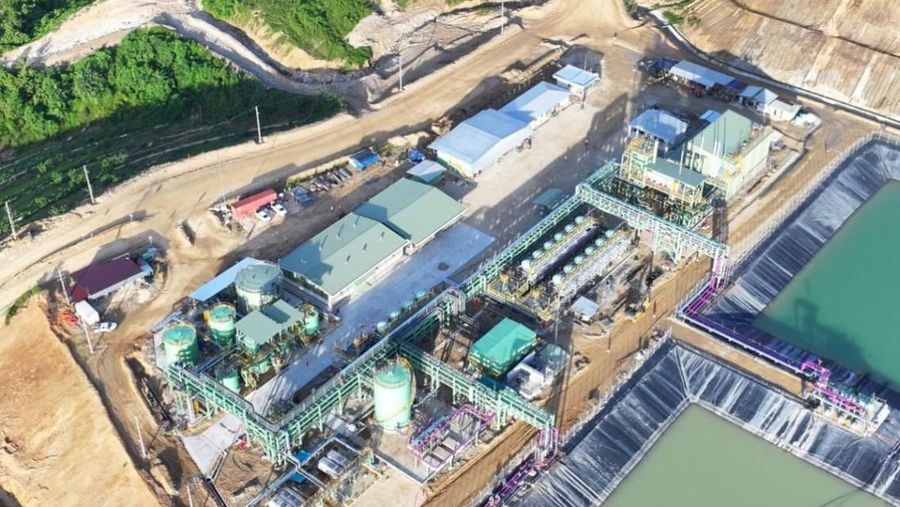
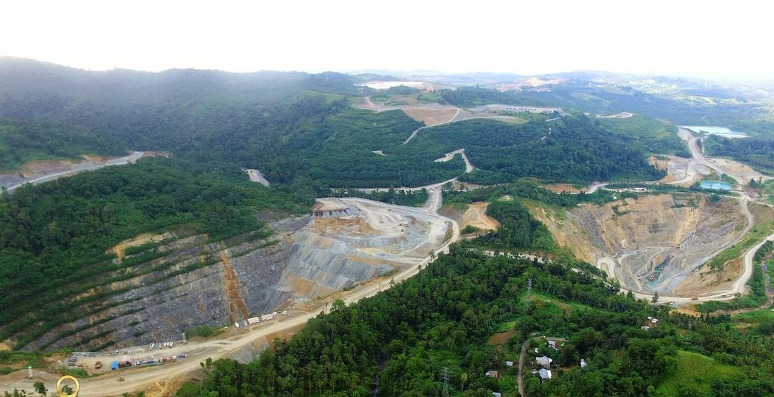
PT Merdeka Gold Resources Tbk (EMAS), a subsidiary of PT Merdeka Copper Gold Tbk (MDKA), announced that the Pani Gold Mine (PGM) began irrigating its heap leach pad on 27 January 2026. This milestone is one of the final steps toward first gold production, which is targeted for the first quarter of 2026.In a heap leach process, crushed gold ore is stacked on a heap leach pad and irrigated with a chemical solution to dissolve the gold and silver contained in the ore. The precious-metal-rich solution (pregnant leach solution) is then routed to the ADR (Adsorption, Desorption, and Recovery) plant for extraction and refining, producing gold and silver in the form of dore bullion.PGM’s ADR facility has completed commissioning and is ready to process the pregnant leach solution. President Director of PT Merdeka Gold Resources Tbk, Boyke Poerbaya Abidin, said that the start of heap leach irrigation confirms that Pani’s first gold production remains on track for the first quarter of this year.“This project is not only a long-term value driver for investors, but is also expected to deliver tangible benefits to regional development—especially for the people of Pohuwato Regency—through increased local revenue (PAD), job creation, and the growth of local MSMEs,” he said, Tuesday (27/1/2026).Alongside the initial heap leach development, the Company is also accelerating construction of a Carbon-in-Leach (CIL) processing facility with an installed capacity of up to 12 million tonnes of ore per year—brought forward from 2027 to 2026—which will support increases in PGM’s medium- to long-term gold production capacity. In terms of resources, the Pani Gold Mine has an Ore Reserve of roughly 4.8 million ounces of gold from a Mineral Resource Estimate of more than 7 million ounces.Given this scale, Pani ranks among the largest primary gold deposits in Indonesia, further strengthening EMAS’s long-term growth fundamentals. With optimized heap leach operations and the development of the CIL facility, the Pani Gold Mine has the potential to produce more than 500,000 ounces of gold per year at peak output, positioning it as one of the largest gold mines in Indonesia and the Asia-Pacific

Freeport’s “Kucing Liar” Mine Gold Reserves Increase to 8 Million Ounces
24 Jan 2026, 09:17 AM 361

Freeport-McMoRan Inc. (FCX) reported that based on PT Freeport Indonesia’s (PTFI) latest exploration results, extractable copper reserves through 2041 are projected to increase to 8 billion pounds and gold to 8 million ounces.These figures are higher than previous reserve estimates, which were 7 billion pounds of copper and 6 million ounces of gold.In FCX’s performance report, it is explained that average production from Kucing Liar at full capacity will reach 750 million pounds of copper and 735,000 ounces of gold, or 35% higher than earlier projections.“During 2025, PTFI completed a study to evaluate the potential expansion of the mine area that was previously designed to operate at a long-term rate of 90,000 tons of ore per day,” FCX management wrote in its official document, quoted Saturday (January 24, 2026).“The study identified low-cost expansion opportunities to increase Kucing Liar’s design capacity to 130,000 tons of ore per day and to boost Kucing Liar’s reserves by around 20%,” FCX management said.FCX reported that, based on the economic study conducted, there will be an increase in capital of USD 0.5 billion, or about 10%, an impact on operating rates at the Grasberg Block Cave (GBC) underground mine, and a delay in capital spending related to processing higher-pyrite ore.FCX also reported that as of December 31, 2025, Freeport Indonesia had spent approximately USD 1.1 billion on Kucing Liar. Meanwhile, required capital investment is estimated to rise by an additional USD 4 billion through 2033.FCX is targeting initial production from the Kucing Liar mine to commence and ramp up gradually starting in 2030.“Initial production is expected to commence and be ramped up gradually around 2030,” FCX management representatives wrote.To date, Freeport Indonesia relies on three mines it owns, namely: Grasberg Block Cave, which produces around 140,000 tons of ore per day; DMLZ, around 70,000 tons of ore per day; and Big Gossan, 7,000 tons of ore per day with higher copper grades.Meanwhile, Freeport Indonesia’s copper production volume in 2025 reached 1.01 billion pounds. This figure is 44% lower than Freeport’s 2024 copper production of 1.8 billion pounds.Copper sales in 2025 were recorded at 1.2 billion pounds, down 26.2% compared with Freeport’s 2024 copper sales of 1.63 billion pounds.On the other hand, Freeport Indonesia’s gold production in 2025 was recorded at 937,000 ounces. This achievement is 49.7% lower than Freeport’s 2024 gold production of 1.86 million ounces.Meanwhile, gold sales in 2025 were reported at 1.05 million ounces. Last year’s gold sales were 42.2% lower compared with 2024 gold sales of 1.81 million ounces.

Indonesia’s Bauxite Downstreaming Gathers Momentum in West Kalimantan, Groundbreaking Planned for ...
23 Jan 2026, 11:58 AM 299

The government will commence initial inaugurations, or groundbreakings, for six strategic downstreaming projects at the end of January 2026. This move marks an acceleration of the national industrial transformation agenda while strengthening the foundation of a value-added, resource-based economy.Minister of State Secretary Prasetyo Hadi said the six projects are ready to enter the initial construction phase as part of efforts to stimulate the real sector and the fundamentals of the national economy.“At the end of this month, there will be roughly six downstreaming projects slated for groundbreaking,” Prasetyo said at the Presidential Palace Complex, Jakarta, Thursday (Jan 22).Prasetyo emphasized that West Kalimantan has been designated as one of the provinces hosting these downstreaming projects.In addition to the first six projects, the government is also preparing around 12 follow-on downstreaming projects targeted for inauguration starting in February 2026.“West Kalimantan is one of them. So there are six projects. Please pray that the remaining roughly 12 can proceed in February. By March at the latest, we aim to have all of them underway,” Prasetyo said.The groundbreaking plan aligns with the agenda of Indonesia’s Daya Anagata Nusantara Investment Management Agency (Danantara), which previously stated it was ready to commence several downstreaming projects in February 2026.Danantara Indonesia CEO Rosan Roeslani said the projects include bauxite and aluminum downstreaming, a bio-avtur facility, an oil refinery, and even poultry-farming projects at five locations.“These include bauxite and aluminum in Balikpapan, then bio-avtur, a refinery, and poultry farming in five places,” Rosan said after the “Semangat Awal Tahun 2026” event in Jakarta, Wednesday (Jan 14).Additionally, a coal-to-dimethyl ether (DME) gasification project may also break ground in February 2026, pending final readiness.This downstreaming push also has the attention of President Prabowo Subianto. On January 11, 2026, the President chaired a limited meeting at his residence in Hambalang, Bogor Regency, West Java, to discuss strengthening national industrial transformation, including bauxite downstreaming.Cabinet Secretary Teddy Indra Wijaya said the meeting reviewed the readiness of several strategic projects that will soon enter the groundbreaking phase.“The limited meeting discussed the readiness of several downstreaming projects that will soon begin groundbreaking,” Teddy said in an official statement.The government is targeting six new downstreaming projects with a total investment of about USD 6 billion to begin construction in early February 2026.One of the flagship projects is the development of an alumina smelter and a smelter-grade alumina (SGA) facility based on bauxite in Mempawah, West Kalimantan.West Kalimantan is seen as strategically positioned for this agenda. According to Indonesia Mining and Energy Watch (ISEW), Indonesia’s bauxite reserves are estimated at 7.78 billion tons. However, selling bauxite as raw ore has so far been deemed suboptimal for the economy.ISEW Executive Director Ferdy Hasiman explained that if all bauxite reserves were sold as raw ore at an assumed price of USD 40 per metric ton, the economic value would be only about USD 311.2 billion. That value rises significantly when bauxite is processed into alumina and aluminum.“Three tons of bauxite can produce one ton of alumina. Assuming a price of USD 400 per metric ton, the potential economic value rises to around USD 1.037 trillion,” Ferdy said.At the next stage, two tons of alumina can produce one ton of aluminum, with an economic value reaching USD 3.885 trillion, or about IDR 65,145 trillion.One flagship project currently being advanced by the government is the integrated bauxite mining and processing facility in Mempawah managed by PT Borneo Alumina Indonesia (BAI), an initiative of the MIND ID Group through PT Aneka Tambang Tbk and PT Indonesia Asahan Aluminium.Beyond the domestic focus, the downstreaming agenda is also attracting international attention. Coordinating Minister for Economic Affairs Airlangga Hartarto revealed that Danantara has held talks with the United States regarding access to critical minerals, including bauxite.“There have been discussions between Danantara and the U.S. export agency, as well as several U.S. companies that have communicated with critical-mineral companies in Indonesia,” Airlangga said.According to him, the cooperation is business-to-business and reflects rising global interest in Indonesia’s critical minerals, which are needed by the automotive, aviation, and defense sectors.
UNIDO Appoints IWIP as a Pilot Project for a Sustainable Nickel Industrial Zone
23 Jan 2026, 10:37 AM 245

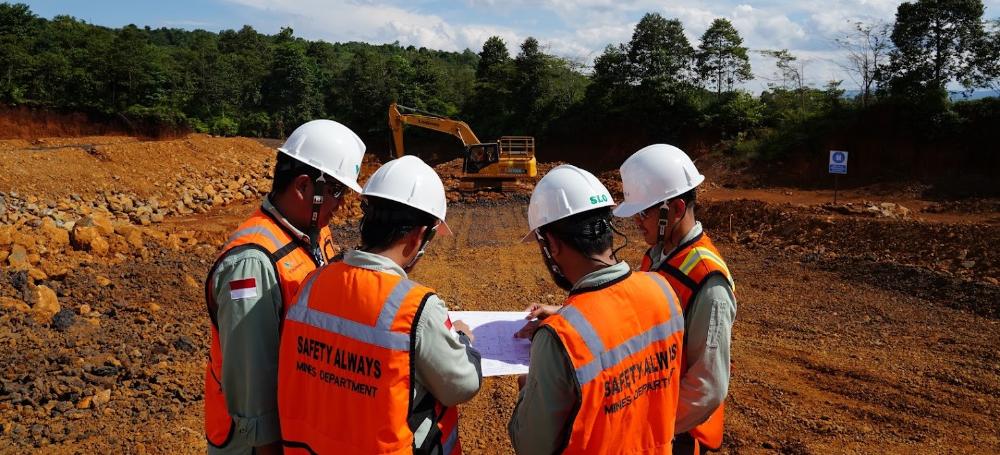
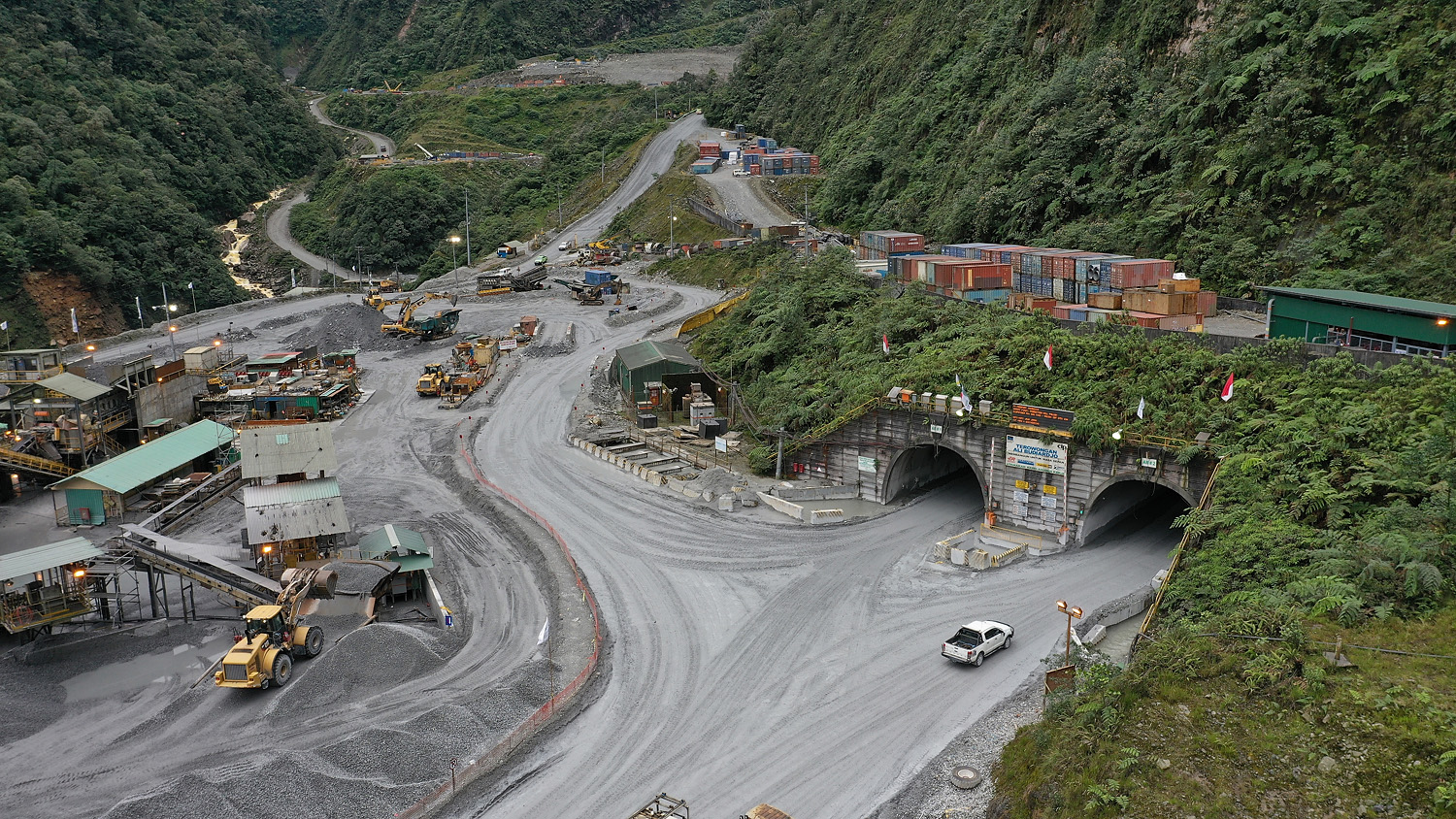
The United Nations Industrial Development Organization (UNIDO) has designated the Indonesia Weda Bay Industrial Park (IWIP) as a pilot project for sustainable management of a nickel industrial zone.This designation refers to the Joint Declaration on the Sustainable Development of the Nickel Industry Chain agreed by Tsingshan Holding Group and UNIDO on November 24, 2025, in Riyadh, Saudi Arabia, coinciding with UNIDO’s 21st General Conference and the Global Industry Summit.Through this collaboration, Tsingshan, UNIDO, and IWIP aim to raise management standards across the industrial park while integrating environmental, social, and governance (ESG) aspects into zone operations.Kevin He, President Director of PT IWIP, said being named a pilot area is a key milestone to strengthen the application of sustainability standards within the park.“IWIP is committed to supporting national priorities—namely downstreaming, value addition, and human capital development—by ensuring that environmental, social, and governance aspects are embedded in operational practices,” he said in a written statement on Friday (January 23).According to him, this is part of positioning Indonesia as a key player in a sustainable global nickel value chain.As an initial step in implementing the partnership, Tsingshan, UNIDO, and IWIP held a stakeholder dialogue titled the Tsingshan–UNIDO Collaboration Conference on Industrial Parks for Sustainable Development.The conference took place on January 14–15, 2026, at the Weda Bay Industrial Park in Central Halmahera, North Maluku.The forum brought together stakeholders including the Ministry of Industry, industry partners, and trade associations to discuss directions for strengthening governance of a sustainable nickel industrial zone.The Ministry of Industry views the partnership as a strategic move to reinforce the national industrial transformation agenda and sustainability-based downstreaming policy.“This collaboration reflects the government’s commitment not only to drive value addition and industrial competitiveness, but also to ensure that the development of industrial parks in Indonesia aligns with ESG principles, environmental protection, and delivers tangible benefits to communities,” said Bayu Fajar Nugroho, Director of Industrial Resource Access and International Promotion at the Ministry of Industry.The Tsingshan–UNIDO–IWIP cooperation is structured over three years, focusing on elevating environmental, social, and governance standards across the park.The initiative will be carried out through four pillars: developing a circular economy, building industrial capacity, empowering communities, and strengthening green supply-chain management.Its scope covers improving resource-use efficiency, adopting cleaner production, enhancing human-capital capabilities, deploying green technologies, applying international standards, and reducing environmental impacts along the industrial value chain.Within this partnership, UNIDO provides technical assistance and capacity building, while Tsingshan Holding Group supports implementation at the industrial-park level.Looking ahead, the experience gained from developing IWIP is expected to serve as an early model for sustainable industrial parks elsewhere in Indonesia.

Vale Indonesia Accelerates Three HPAL Smelter Projects: Pomalaa & Bahodopi to Complete in 2026, Soro...
21 Jan 2026, 08:58 AM 450

PT Vale Indonesia Tbk (INCO) continues to accelerate the construction of three High Pressure Acid Leaching (HPAL)-based nickel smelter projects in Sulawesi: Pomalaa, Southeast Sulawesi; Bahodopi, Central Sulawesi; and Sorowako, South Sulawesi. These three projects are part of its nickel downstreaming strategy and strengthening the supply chain for the electric vehicle battery industry.Vale Indonesia's President Director, Bernardus Irmanto, described the Pomalaa Indonesia Growth Project (IGP) as the most advanced. The project, which includes a mine and HPAL smelter, is being developed in collaboration with Chinese partner Zhejiang Huayou Cobalt and the American automotive company Ford Motor. The total investment reaches USD 4.5 billion, or approximately IDR 76.2 trillion (exchange rate of IDR 16,935/USD)."The HPAL plant's construction progress has reached 60 percent, while the mining sector has also reached 60 percent. Two autoclaves have arrived, and three more will follow, bringing the total to five autoclaves. Mechanical completion is targeted for August 2026," Bernardus said during a House of Representatives Commission XII hearing on Monday (January 19, 2026).The Pomalaa Smelter has a production capacity of 120,000 tons of mixed hydroxide precipitate (MHP) per year, with ore supplied from the Pomalaa Block, which can produce 7 million tons of nickel saprolite and 21 million tons of nickel limonite per year. By August 2026, the smelter will be ready to receive a three-month stockpile of nickel ore. The project is also expected to employ 5,150 workers.The second project is the Morowali IGP in Bahodopi, developed in collaboration with Chinese company GEM and South Korean company Ecopro. The Bahodopi HPAL smelter is targeted to reach mechanical completion in the fourth quarter of 2026, with a production capacity of 66,000 tons of MHP per year. The smelter's raw materials will be supplied from a mine capable of producing 5.5 million tons of nickel saprolite and 10.4 million tons of nickel limonite per year, and requires an ore supply for three months of operation. The project is estimated to employ 3,579 workers.The third project, the Sorowako Limonite IGP in South Sulawesi, is being developed in collaboration with Zhejiang Huayou Cobalt, with a third potential partner still in the assessment stage. Construction of the smelter is only 17 percent complete, with a production capacity of 60,000 tons of MHP per year and an annual ore supply of 11.5 million tons of nickel limonite. The Sorowako smelter is targeted to begin operations in 2027.Bernardus emphasized the importance of support from Commission XII of the House of Representatives (DPR) regarding the sustainability of nickel ore supplies so that the three smelter projects can proceed as planned. "At least two autoclaves are expected to be completed in Pomalaa by August 2026, followed by the completion of the entire line by January 2027. Bahodopi is expected to be completed in the fourth quarter of 2026, and Sorowako is expected to begin in 2027," he said.

Darma Henwa (DEWA) Extends Mining Contract with Arutmin Worth IDR 10.5 Trillion
20 Jan 2026, 12:38 PM 317

PT Darma Henwa Tbk (DEWA) has signed an extension of its mining services contract with PT Arutmin Indonesia for the Kintap and Asam-Asam projects, with an estimated value of IDR 10.5 trillion. The agreement was signed on January 19, 2026, and will run for the life of mine.Darma Henwa said the contract covers core activities including overburden removal, coal getting, and coal hauling at mine sites located in Tanah Laut Regency, South Kalimantan.Under the new contract, the company will strip approximately 252 million bcm of overburden and produce around 50 million tonnes of coal for Arutmin over the mine life, starting January 2026.In the previous contract, Darma Henwa’s average annual output at the Asam-Asam project was 17.3 million bcm of overburden and 3.8 million tonnes of coal. At Kintap, average overburden removal reached 25.3 million bcm with coal production of 3.8 million tonnes per year.Darma Henwa Director Ricardo Silaen said the extension provides long-term operational certainty for the company and will have a positive impact on financial performance.“This contract extension provides long-term operational certainty for Darma Henwa and Arutmin and has a positive impact on our performance. It reflects Arutmin’s confidence in our mining capabilities and capacity, as well as our adherence to Good Mining Practice. We remain committed to operational excellence with a zero-fatality target,” Ricardo said in an official statement on Tuesday (January 20, 2026).In a disclosure to the Indonesia Stock Exchange, DEWA’s management stated that the life-of-mine contract does not have a negative material impact on the company’s operations, legal aspects, or business continuity. On the contrary, it provides long-term certainty for operational activities and contributes positively to the company’s financial condition.The company also stated it has passed the “rewriting the future” phase, marking a successful turnaround from performance pressure to profitability in a relatively short time. This achievement forms the foundation for entering the next phase—“reshaping the future”—with a focus on more progressive, efficient, and digitalized business expansion.Aligned with its long-term strategy, Darma Henwa is committed to strengthening competitiveness through sustainable business expansion, leveraging digitalization, consistently applying good mining practices, and promoting the use of electric vehicles (EVs) as part of future mining operations.

Intraco Penta (INTA) Targets Up to 15% Revenue Growth in 2026
19 Jan 2026, 11:05 AM 210

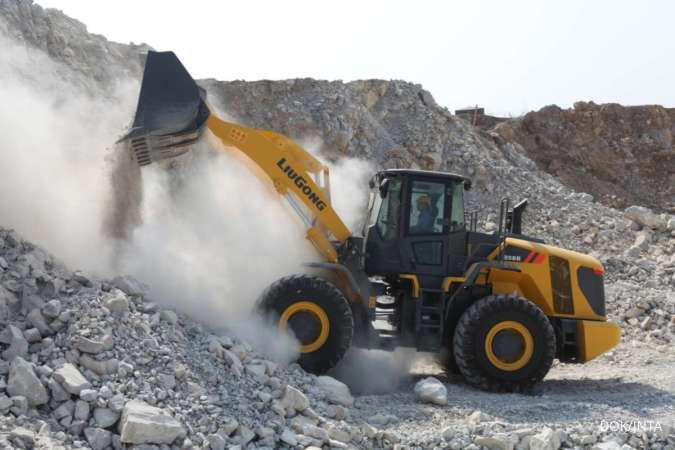
PT Intraco Penta Tbk (INTA) has prepared a number of strategies to pursue double-digit revenue growth in 2026. The company aims to diversify heavy-equipment sales markets while boosting income from its rental business.Director of Intraco Penta, Willianto Febriansa, said INTA is targeting revenue growth of 10%–15% this year compared to 2025. Although strategies have been laid out to achieve the target, INTA will remain cautious amid several challenges facing the heavy-equipment industry this year.One focus is the government’s move to cut production targets for several mining commodities in the 2026 Work Plan and Budget (RKAB). INTA is anticipating efficiency measures that miners may take in line with the production caps.“The heavy-equipment business outlook in 2026 will be challenging and the company is required to drive efficiency across all aspects. We hope the government’s policy and plans (to trim production targets) will lift global commodity prices, especially coal and nickel,” Willianto told Kontan.co.id on Sunday (January 18, 2026).The mining sector remains the main market for INTA’s heavy-equipment business. Demand from coal customers contributes around 63% of INTA’s revenue, followed by nickel at 14%, cement (9%), gold (5%), forestry (4%), and other sectors (5%).Given that mix, INTA wants to accelerate market diversification to reduce reliance on coal. “This year the company is seeking to lower the coal portion and develop the cement and forestry sectors, alongside nickel and gold, which have started to add to their contribution,” Willianto said.Willianto has not disclosed INTA’s financial performance or heavy-equipment sales realization for last year. He only indicated that 2025 sales would be stable compared to 2024. “The 2025 annual report is in the audit process,” he said.What is certain is that INTA will boost revenue from the heavy-equipment rental line. As a reminder, last year INTA significantly increased income from rental services.INTA’s rental revenue surged 4,836.79% year-on-year to IDR 156.99 billion as of September 2025, from IDR 3.18 billion a year earlier. “The significant increase in rental services occurred due to several rental projects from our customers,” Willianto said.He is optimistic that the heavy-equipment and truck rental business will again be a growth driver this year. Willianto projects the rental segment will rise further and contribute around 20% of INTA’s revenue target in 2026.To achieve this, INTA has set a capital expenditure (capex) budget of IDR 260 billion. Most of this year’s capex will be used to procure heavy equipment and trucks for the rental business.For reference, INTA is a dealer for LiuGong heavy equipment, Doosan, and Sino Howo trucks. Willianto said LiuGong’s move to build a heavy-equipment manufacturing facility in Indonesia could also have a positive impact on INTA.LiuGong Indonesia is building a heavy-equipment plant in West Karawang. “The operation of LiuGong’s plant will be positive for the company’s development because it will greatly support equipment and parts availability for sales,” Willianto said.Separately, INTA plans to divest assets in the form of the building and land currently used as its headquarters in the Cakung–Cilincing area of Jakarta.The asset-divestment strategy is part of efforts to accelerate bank debt repayment, allowing INTA’s balance sheet position to become healthier.

Danantara Prepares a Massive IDR 43 Trillion Investment to Strengthen Mineral Downstreaming in West ...
16 Jan 2026, 12:48 AM 393

West Kalimantan is preparing to become a new economic center of gravity through the strengthening of mineral downstreaming. The Indonesia Investment Authority, Danantara, has confirmed that it will soon conduct groundbreakings for six national strategic projects throughout this year, with the majority of these projects focused in the West Kalimantan region.CEO of Danantara Indonesia, Rosan Perkasa Roeslani, revealed that among the six major projects set to commence, the bauxite-to-aluminum downstreaming industry is a top priority. This is due to West Kalimantan's significant potential as a region with Indonesia’s most abundant bauxite reserves."Those six projects cover downstreaming in bauxite, alumina, and aluminum. West Kalimantan is our main highlight because, in addition to our core projects, there are three additional projects also located in the region," Rosan stated during a briefing in Jakarta on Thursday (15/1).The total investment prepared for this series of downstreaming projects reaches a fantastic figure of approximately USD 2.8 billion, equivalent to more than IDR 43.8 trillion. The selection of West Kalimantan as a key region is based on the strong availability of raw materials and an industrial ecosystem that is considered already formed and ready for large-scale development.This investment is expected to not only increase the added value of domestic mineral commodities but also provide a direct economic impact for local communities in West Kalimantan, ranging from job creation to the strengthening of regional industrial supply chains.In addition to the mineral focus in West Kalimantan, Danantara is also preparing expansions across various other sectors throughout Indonesia. These projects include industrial development in Cilacap and Banyuwangi, the production of bio-avtur as an eco-friendly energy source, and downstreaming in the livestock sector spread across five regions in Indonesia.Regarding the livestock sector, Rosan explained that his team has assessed 13 potential locations, five of which have completed feasibility studies with satisfactory results and are ready for immediate realization.

Vale Indonesia Resumes Mining Operations After 2026 RKAB Is Officially Issued
15 Jan 2026, 04:29 AM 960

PT Vale Indonesia Tbk has officially received approval for its 2026 Work Plan and Budget (RKAB) from the Ministry of Energy and Mineral Resources (ESDM) on Thursday (15/1/2026). With the approval of the RKAB, Vale's mining operational activities have resumed.President Director and CEO of Vale Indonesia, Bernadus Irmanto, stated that with the acquisition of this RKAB, Vale is focused on restoring all operational and construction activities in Sorowako, Pomalaa, and Bahodopi. These activities will be based on safety aspects in accordance with applicable licensing regulations, ensuring they run optimally to make up for the backlog caused by the previous temporary suspension.The approval of the 2026 RKAB is an implementation of the Government's policy to reintroduce the annual RKAB approval mechanism, replacing the previous scheme which was based on a three-year integrated cycle with other basic permits.Vale welcomes this certainty as an important foundation for maintaining production discipline, good governance, and the sustainability of the national nickel industry. "With the complete licensing foundation, all our activities are now running normally again, in a compliant and sustainable manner," said Bernadus Irmanto in a written statement on Thursday (15/1/2026).Bernadus mentioned that the company will proceed with operational and production plans in accordance with the approval granted, while ensuring the continuity of supply for the national processing and refining industry.Previously, the Director General of Minerals and Coal (Dirjen Minerba) of the Ministry of ESDM, Tri Winarno, stated that his office had given the green light for the 2026 RKAB approval for Vale Indonesia.“It should happen later tonight. Approval is expected,” said Tri Winarno on Wednesday (14/1/2026).Furthermore, Tri revealed that Vale's mining activities were currently suspended as the company awaited RKAB approval. However, the needs of the smelters could still be supported by the existing stock availability.

ARCI Indonesia Allocates USD 10 Million for Gold Exploration Across 397 Prospective Areas
14 Jan 2026, 12:50 AM 567

Throughout 2025, PT Archi Indonesia Tbk (ARCI) spent approximately USD 10 million on gold exploration activities at the Toka Tindung Mine in North Sulawesi. This information was disclosed by the company in a press release in Jakarta yesterday.Through its subsidiaries, PT Meares Soputan Mining (MSM) and PT Tambang Tondano Nusajaya (TTN), ARCI completed 397 drill points. The total drilling depth for the January–December 2025 period reached 85,893 meters. ARCI management stated that drilling activities were focused on the East and West corridors of the Toka Tindung Mine to upgrade the resource and reserve classification of the company’s core assets.In the first quarter (Q1) of 2025, the company drilled 84 points with a total depth of 19,833 meters. Subsequently, in Q2 2025, ARCI drilled 106 points with a depth of 20,742 meters. In Q3 2025, the company drilled 107 points with a depth of approximately 22,599 meters. Finally, in Q4 2025, ARCI drilled 100 points with a total depth of 22,719 meters.ARCI management noted that the gold resource drilling and exploration activities utilized both diamond drilling and reverse circulation methods. The company's 2025 exploration results showed high-grade gold findings in several intervals, including grades reaching 26.57 grams per tonne (g/t) over a 5.40-meter interval, 13.66 g/t over 11.10 meters, and 16.26 g/t over 13.00 meters.As is known, the Toka Tindung Gold Mine consists of two Contracts of Work (CoW) with a total concession area of 39,817 hectares spanning two administrative regions: North Minahasa Regency and Bitung City, North Sulawesi. These Contracts of Work are valid until 2041 and are held by MSM and TTN.Under the Amended Mining Law, MSM and TTN are guaranteed two extensions of their Contracts of Work in the form of Special Mining Business Licenses (IUPK), with each extension for a maximum period of 10 years. ARCI recorded a net profit attributable to owners of the parent entity of USD 70.47 million as of Q3 2025, a turnaround from a net loss of USD 4 million in the same period last year.As of September 30, 2025, Archi Indonesia Tbk (ARCI) held an unappropriated retained earnings balance of USD 233.12 million and total equity of USD 343.95 million. Increased gold production and sales from the main mine in North Sulawesi were the primary drivers of ARCI’s performance growth. By the end of Q3 2025, ARCI recorded total gold production of 90,000 troy ounces (koz), a 23% increase compared to 73,000 troy ounces in the same period the previous year.

Advertisement


GET YOUR PASS