Harum Energy (HRUM) Relies on Coal and Nickel Business Segments to Boost Performance
09 Feb 2025, 03:50 PM 5473

PT Harum Energy Tbk (HRUM) is optimistic about achieving positive performance by relying on its coal and nickel business lines in 2025.HRUM Corporate Secretary Renny Soependi stated that market conditions will influence performance this year. Specifically, the coal sector is expected to remain strong and stable, similar to 2024. This is reflected in the projected coal price index, which is expected to average USD 120 per ton."As a player in the coal and nickel sectors, the company will continue to grow with a revenue mix that will increasingly lean towards nickel in the future," said Renny to Kontan, quoted on Sunday (9/2).Renny explained that in 2024, 57% of consolidated revenue was contributed by the nickel business. For this year, HRUM projects that EBITDA will grow in line with the development of its nickel business.Meanwhile, HRUM management ensures it will maintain the performance of its coal business by focusing on the development of existing assets and effective cost management.Renny stated that for this year, the company targets coal production of approximately 5.4 million tons, in accordance with the Work Plan and Budget (RKAB)."For our nickel business, we will continue to improve operational efficiency across all ongoing projects, including increasing production from PT Position (POS) mine," Renny explained.Renny continued, stating that the company is also pushing forward with the high-pressure acid leaching project at PT Blue Sparking Energy (BSE). This project is reported to have reached over 50% completion. As a result, the project is expected to start contributing to the company's performance by the end of this year or early next year."The company (also) targets an increase in nickel production driven by the operation of the second smelter operated by PT Westrong Metal Industry (WMI)," Renny explained.

PT Timah (TINS) Aims for Net Profit of Up to IDR 1.5 Trillion by 2025
09 Feb 2025, 03:49 PM 6569

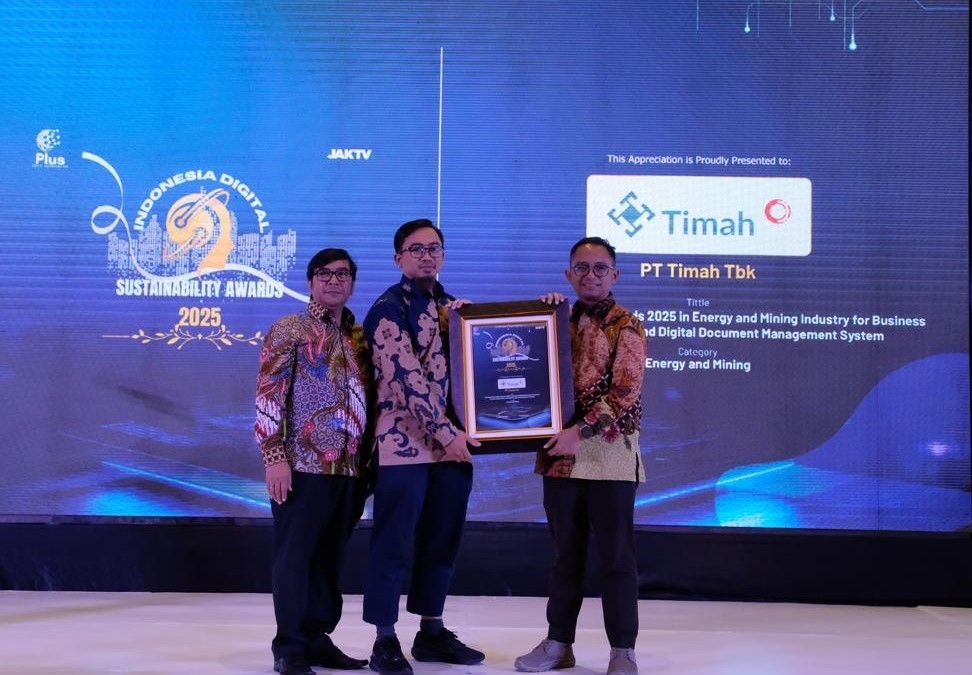
PT Timah Tbk. (TINS) is targeting a net profit of between IDR 1 trillion and IDR 1.5 trillion this year. This bottom-line projection is supported by a revenue target of IDR 12 trillion to IDR 13 trillion for 2025. TINS Corporate Secretary, Rendi Kurniawan, said that this year’s target is driven by an increase in tin resources and reserves, as well as the opening of new mines. "Performance improvements and the restructuring of the company’s subsidiaries and efficiencies across all business lines," said Rendi when contacted on Saturday (8/2/2025). Rendi explained that there will be an increase in the production capacity of tin ore and tin metal sales by about 10% to 20% this year, compared to the performance realization in 2024.On the other hand, he confirmed that the demand for tin metal this year is relatively strengthening. Citing data from the London Metal Exchange (LME) as of February 7, 2025, the price of tin for the three-month contract closed at USD 31.309 per ton. Meanwhile, by July 2025, the price of tin closed at USD 31,201 per ton. "The tin market is currently in a positive outlook," he said. Previously, TINS confirmed that it would distribute dividends for the 2024 fiscal year. This decision was made after the company successfully recorded a significant net profit of IDR 908.78 billion from January to September 2024. Furthermore, TINS management estimates that the dividend payout ratio (DPR) for the 2024 fiscal year will be in the range of 30% to 35%. With this consideration, Sucor Sekuritas has a positive outlook on the movement of TINS's stock and performance this year. Sucor recommends a buy with a target price of IDR 1,740 per share, assuming a weighted average cost of capital (WACC) of 13.6%. "We view the tin industry optimistically, driven by its strategic role in supporting the computing, robotics, electric vehicle, and renewable energy sectors," wrote Sucor Sekuritas Analyst Jeremy Hansen N.H in his research, quoted on Saturday (8/2/2025).Sucor Sekuritas predicts that the demand for tin will double from its current levels, reaching nearly 800,000 tons by 2040. However, supply is expected to be limited, with an annual deficit of about 2.5% due to the scarcity of new mining projects globally."Moreover, with production limited in Indonesia, this will keep the average tin selling price around USD 28.000 to USD 35.000 per ton, which will benefit producers like TINS,"wrote Jeremy.On the other hand, Sucor projects that TINS will be able to post a net profit of IDR 1.14 trillion, generating a 16% return on equity. Jeremy explained that the key driver of TINS's return on equity comes from higher net margins with cash costs around USD 18,000, 18% lower on an annual basis. "We forecast net profits for 2025 will range from Rp1.37 trillion to Rp1.43 trillion, driven by production growth, clearer regulations, and average selling price (ASP) increases," he said.

Merdeka Copper (MDKA) Targets Gold Production of 110.000 Ounces This Year
08 Feb 2025, 03:48 PM 6348

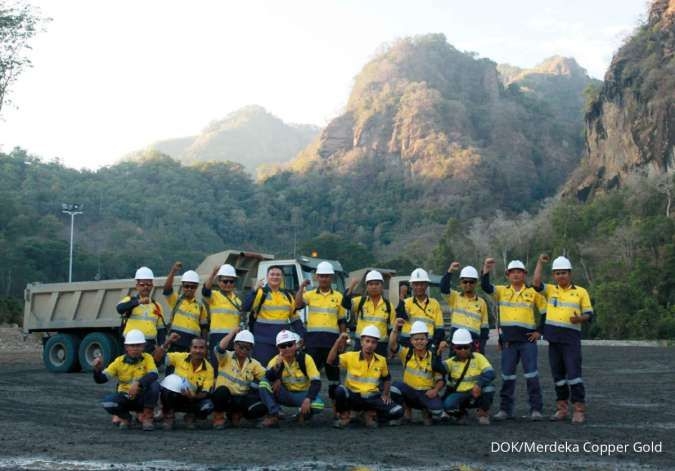
PT Merdeka Copper Gold Tbk. (MDKA) has set relatively moderate gold and copper production guidance for this year. Meanwhile, MDKA has set copper production guidance at 11.000 tons to 13.000 tons. MDKA's President Director, Albert Saputro, stated that the company is aiming for the commissioning of the Pani Gold Project by the end of this year, as well as the development of unprocessed copper deposits from the Tujuh Bukit Copper Project."The operations of gold, copper, and nickel at Merdeka are in line with our production guidance, generating unaudited quarterly and full-year revenues for 2024 of USD 575.8 million and USD 2.2 billion, respectively,’ said Albert in a written statement, quoted on Saturday (8/2/2025). According to the management report, MDKA's gold production throughout 2024 reached 115,867 ounces, with a total cash cost of USD 1.101,7 per ounce, AISC of USD 1.337 per ounce, and an average selling price of USD 2.371 per ounce.Meanwhile, copper production throughout 2024 reached 13.902 tons, within the guidance range of 13.500 tons to 14.000 tons.Additionally, the Wetar Copper-Pyrite Mine exceeded the cash cost guidance for 2024, with a cost of USD 2.63 per lb and an AISC of USD 3.58 per lb. "Merdeka's strategic investments are expected to significantly improve our performance, especially with the commencement of operations at the two MBMA HPAL facilities and the commissioning of the Pani Gold Project by the end of 2025," said Albert.As reported earlier, MDKA incurred a loss of USD 67.02 million or around Rp1.03 trillion (assuming an exchange rate of IDR 15.384 per US dollar) for the period from January to September 2024. According to the company's financial report released on Wednesday (18/12/2024), the loss position of the gold and copper mining company widened from the same period last year, which stood at USD 23.77 million.  MDKA recorded operating revenue of US$1.66 billion or around IDR 25.65 trillion. This figure surged 42.5% from the revenue collected by MDKA in the same period last year, which was USD 1.17 billion or around IDR 18 trillion.

LX International Seeks to Acquire Nickel, Copper Mines in Indonesia
07 Feb 2025, 03:46 PM 5695

LX International Corp., the trading unit of South Korea’s LX Group, said on Friday it is seeking to acquire a nickel mine and a copper mine in Indonesia as it expands its battery materials business.During an earnings conference call with analysts earlier on Friday, company executives said LX plans to buy an additional nickel mine following a similar deal last year. It is also seeking to purchase a copper mine in Indonesia for the first time.LX International, formerly LG International, generates most of its natural resources business revenue from coal production and sales.Executives said the company is now more aggressively diversifying its business portfolio to promising minerals such as nickel and copper.While nickel is a key raw material for lithium-ion batteries and stainless steel production, copper is widely used across industries, including as a raw material for electric vehicles, batteries, solar energy, and even in data centers.Recently, the decline in electric vehicle sales has led to reduced battery production, causing nickel prices to drop significantly.OPTIMAL TIME FOR A MINE PURCHASEIndustry officials said LX International sees the current decline in nickel mine prices as an optimal investment opportunity.“In the mid-to-long term, nickel prices are set to rise as EV sales will surely increase.  Demand for stainless steel in China is also growing,” said an LX official.In January 2024, LX International forayed into the nickel business by acquiring a 60% stake in Indonesian miner PT Adhi Kartiko Pratama (AKP) for 132.9 billion won (USD 99.8 million) to secure key minerals for secondary batteries.The PT AKP mine is estimated to have reserves of 36 million tons of mineable nickel – enough to produce batteries for 7 million EVs.LX plans to raise its annual nickel production volume from the mine to 3.7 million tons by 2028 from 1.5 million in 2024.Despite worsening market conditions, the mine reportedly turned a profit last year.“The PT AKP mine is probably the most cost-effective nickel mine in Indonesia,” said an LX executive.2024 EARNINGSLX International is also exploring copper mine acquisitions in Indonesia, the Philippines and Australia, sources said.Meanwhile, the company said in a regulatory filing on Friday that it posted 489.2 billion won in operating profit on sales of 16.64 trillion won in 2024 on a consolidated basis, up 13% and 14.6%, respectively, from the previous year.The improved performance was driven by increased palm oil and other resource trading, as well as higher maritime freight rates earned by its affiliate LX Pantos Co.LX International has been shifting its natural resource business focus from coal to EV battery minerals.In Indonesia, it owns a stake in the Ganda Alam Makmur (GAM) coal mine.

PT STM's Exploration Continues, Production Target Set for 2030
07 Feb 2025, 03:45 PM 5123

Copper and Gold Mining Exploration by PT Sumbawa Timur Mining (STM) at the Onto Block in Hu'u District, Dompu Regency, still requires a long period of time before entering the production stage.PT STM targets production to begin in 2030, after completing all stages of the feasibility study.Currently, PT STM is in the pre-feasibility study (Pre-FS) phase, which will take several more years before reaching the final feasibility study (FS)."Right now, it's still in the Pre-FS phase, and they are preparing the necessary documents. There is no further exploration work being done," said Izzudin Mahili, Acting Head of the Energy and Mineral Resources (ESDM) Department of West Nusa Tenggara (NTB) Province, to Radar Lombok on Thursday (February 6).He stated that the Pre-FS phase is expected to be completed by 2028. If the study results show a viable potential, production can begin in 2030.However, as of now, the department is unable to estimate the potential mining reserves that PT STM may generate. "The results will only be available after the study is completed. Even then, the authority lies with the Ministry," he explained."After the feasibility study is completed, PT STM still needs to go through various preparations before entering the construction and production stages. The feasibility study covers various aspects, including environmental analysis, social impact, and technical aspects of mining operations."Everything takes time, including the study from the Ministry of Energy and Mineral Resources (ESDM). Since the special mining business permit (IUPK) is under the Ministry's authority," he added.Izzudin emphasized that up to this point, PT STM has not conducted exploitation, but is still in the process of assessing the mining potential in the area. He gave the example of PT Amman Mineral Nusa Tenggara (AMMAN), which also took years before it could begin its mining production.Regarding the issue that PT STM is not empowering the local community in its project, Izzudin denied the accusation. He explained that because the project is still in the feasibility study phase, the need for labor is still limited.""This is still in the feasibility study stage, not exploration. So, the number of workers needed is still limited. Once the company starts requiring labor, they will recruit. But if it's not needed yet, the number of workers will also remain limited," he said.The government of NTB Province hopes that the production process can begin as soon as possible so that the economic benefits of the mining project can be felt by the community. However, he also emphasized that the final decision remains in the hands of the central government and the company.Before entering the Pre-FS stage, initial exploration results showed that the mining potential in Hu'u is quite large. However, the exact reserve figures will only be known after the FS is completed."This stage is determined by the ministry. The company also has to calculate carefully, because this is a large investment. If the potential found is small, they will certainly reconsider the continuation," he said.

PTBA Pursues NZE by Maximizing Reserves and Electrifying Heavy Equipment
07 Feb 2025, 03:43 PM 3324

In an effort to support the government's 2060 Net Zero Emission (NZE) target, PT Bukit Asam Tbk (PTBA) continues to develop its decarbonization strategy. PTBA's President Director, Arsal Ismail, emphasized that the company has prepared various concrete steps to contribute to carbon emission reduction, including optimizing coal reserves and electrifying heavy equipment. Currently, PTBA has 3 billion tons of coal reserves with an annual production of around 40 million tons. To anticipate the energy transition, PTBA plans to increase production to 100 million metric tons in the next three to four years."The goal is that before moving towards net zero emission, PTBA’s coal resources will have been fully optimized before 2050," said Arsal during the Fortune Indonesia Summit 2025 at the Westin Jakarta, Thursday (February 6).In line with the energy transition, PTBA has started replacing fossil fuel-powered heavy equipment with electric-powered equipment. "We have begun electrifying mining equipment that previously used diesel fuel. This initiative is already underway and will continue to be developed to reduce carbon emissions," he added.Post-Mine Site ReclamationIn addition to decarbonization, PTBA also focuses on post-mining site reclamation. The company replants former mining areas with its own plant seedlings to restore ecosystems and absorb carbon. "We want to ensure that former mining sites can return to their original state, or at least closely resemble the original condition," said Arsal.PTBA is also innovating through coal downstreaming to increase added value. The coal owned by the company will be developed into derivative products such as gasification, which can be converted into artificial graphite, an essential component in the electric vehicle (EV) battery ecosystem."This downstreaming is part of our efforts to support emission-free energy," he added.On the other hand, PTBA continues to optimize its Supercritical Steam Power Plants (PLTU), which have the ability to reduce carbon emissions compared to conventional technology. This way, PTBA can continue to contribute to the national energy supply with a minimal environmental impact.Through these various steps, PTBA is optimistic that it can become part of the solution in achieving the NZE 2060 target."We continue to pursue decarbonization, downstreaming, and reclamation simultaneously so that PTBA can make a significant contribution to reducing carbon emissions in Indonesia," said Arsal.

French Mining Giant Eramet Eyes Investing in South Sulawesi, Papua
05 Feb 2025, 03:41 PM 3316

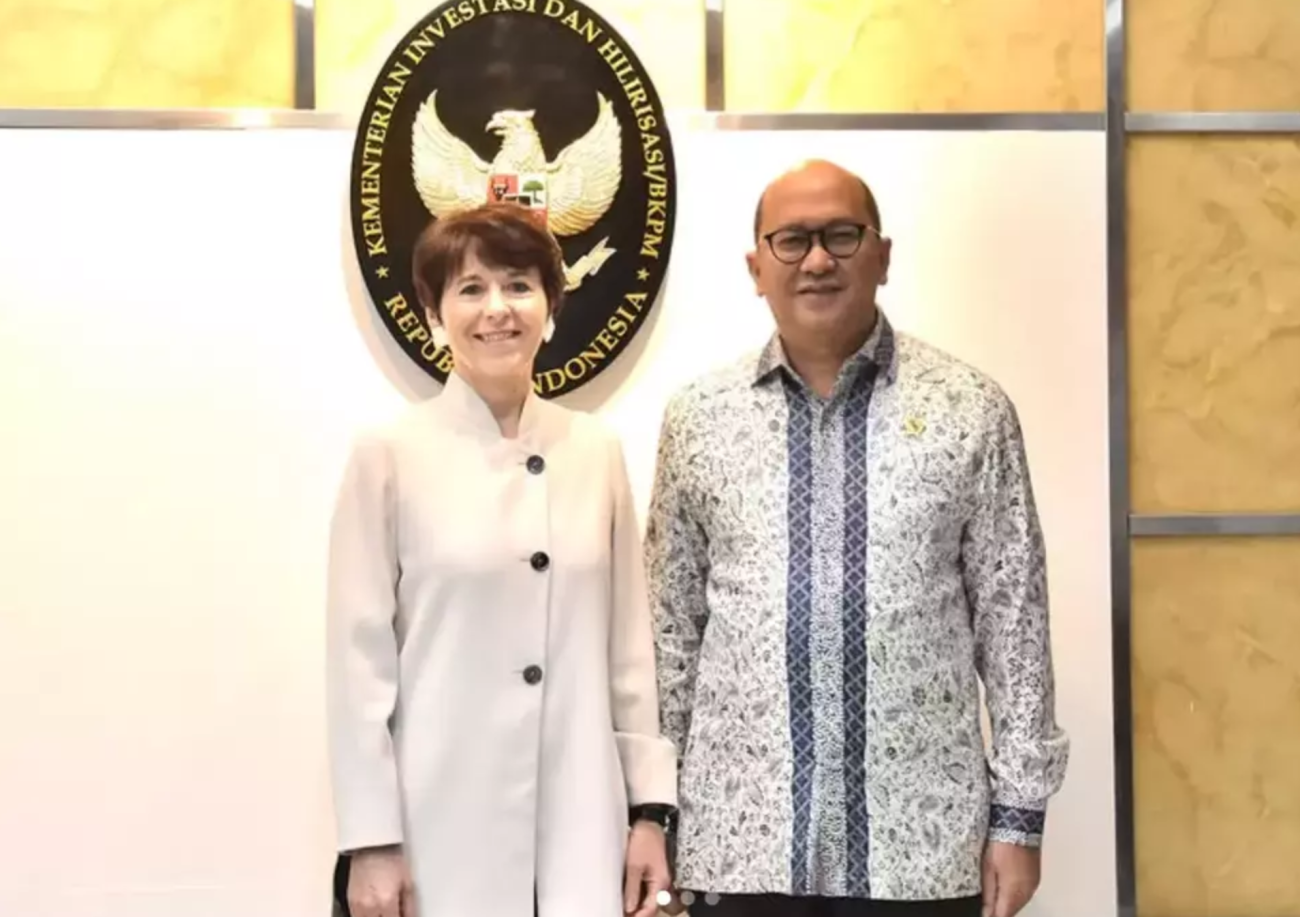
Investment Minister Rosan Roeslani recently said that the French mining giant Eramet was looking to invest in South Sulawesi and Papua.In Indonesia, Eramet is a minority shareholder in the Weda Bay Nickel joint venture which it operates alongside Chinese nickel firm Tsingshan Holding Group and state gold miner Antam. This entity develops an open-pit mining operation in Halmahera Island, North Maluku. Earlier this week, Eramet Group’s chief executive officer Christel Bories visited Rosan in his office to discuss the French company’s operation plans in Southeast Asia’s largest economy. In a social media post, Rosan revealed that Eramet sought to help Indonesia process its critical minerals at home and develop the country’s electric vehicle (EV) development ecosystem.“Eramet also laid out its investment plans to explore new areas in South Sulawesi and Papua. They also talked of [investment plans] for a responsible green electric vehicles project that will involve several strategic partners,” Rosan wrote Tuesday.“This collaboration is also expected to create jobs and boost technology transfer,” he said.Later that day, Rosan told reporters that Eramet was “not only looking to be a contractor, but also develop some sort of production in Indonesia in partnership with a state-owned company.”He also gave his word that his ministry would help facilitate Eramet’s investment plans in Indonesia.Eramet data shows that the Weda Bay is the world’s largest nickel mine, representing 17 percent of the global production. Last year, Indonesia amassed around IDR 1,714.2 trillion or approximately USD 105 billion in combined investments throughout 2024. About 52.5 percent of that money came from foreign investors. France ranked 16th place in terms of Indonesia's largest source of foreign direct investment (FDI) that year. The European country invested approximately USD 328.1 million in Indonesia over the said period. The French investment went to 6,437 projects. Nickel is a mainstay ingredient in EV battery production. Indonesia posted IDR 153.2 trillion investments in the nickel smelting industry for the entirety of 2024. The Indonesian EV battery ecosystem also booked IDR 8.4 trillion in investments.In 2022, Eramet and German chemical producer BASF unveiled plans to jointly invest in Sonic Bay, a hydrometallurgical plant project in Halmahera. The project was set to process nickel and cobalt for EV battery production. However, Eramet-BASF announced last year that they would withdraw from the USD 2.6 billion project. 

Digital Advancements at Golden Energy Mines Increase Coal Production Tenfold
03 Feb 2025, 08:54 AM 4321

Golden Energy Mines Tbk. (GEMS) is a public company engaged in coal mining. The company began its commercial operations in 2010 and operates under the Sinarmas business group.GEMS holds coal mining licenses for regions in Jambi (through KIM Block), South Sumatra (through BSL and EMS Group), West Sumatra (through EMS Group), South Kalimantan (through Borneo Indobara), and Central Kalimantan (through PT Trisula Kencana Sakti).The company’s total mining area covers approximately 66,204 hectares, with total resource potential reaching 2.91 billion tons and total reserves reaching 1.03 billion tons.The coal mining operations of Borneo Indobara (BIB) are divided into two blocks: the western block (24,100 hectares) and the eastern block. The Coal Mining Business Agreement for both blocks is valid until 2036. The coal resources are around 1.696 billion metric tons, with reserves of approximately 625 million metric tons. Coal production capacity has reached up to 54 million tons this year. BIB is also continuously developing infrastructure capacity to achieve higher coal production. Three Stages The background for digital transformation is driven by several factors, including the target to increase coal production. Additionally, GEMS aims to measure mining operations using technology, especially in the current digital era. The business also faces challenges related to costs and profits. As a result, GEMS management decided to immediately pursue digital transformation by establishing a dedicated division, the Digital and Technology Solution Division.According to Dimas “Omdim” Sutejo, the Chief Digital & Technology Officer of GEMS, one of the company's business units, BIB in South Kalimantan, has successfully undergone digital transformation, which has significantly impacted the company’s operational performance.The digital transformation at BIB is divided into three stages. The first stage, before 2020, was when digitalization had already been introduced at BIB or within the GEMS environment. However, it was referred to as early digitalization, and the process was called pre-digital.At that time, digitalization was introduced in the form of applications and websites. The company also began building a basic foundation, using radio technology for connectivity within the mining area owned by GEMS.The second stage, in 2021/2022, saw BIB starting to organize digital transformation with the establishment of a special division, Digitech, which began to accommodate customer feedback, user requirements, and basic automation.The third stage, from 2023 until now, is referred to as accelerated digitalization. BIB has developed around 30 applications that provide added value and value creation for the company. Now, in terms of digitalization, both people and processes have become more major, resulting in numerous benefits.Omdim explained that the 30 applications at BIB are divided into four aspects: HSE (Health, Safety, and Environment), social networking, back-office support, and mining operations. The company uses two approaches: agile methodology and interoperability (the ability of applications and systems to securely and automatically exchange data without barriers) for the applications they use."This is the digitalization we have developed in our company group. We try to digitalize everything from the pit (the large hole excavated on the surface or in the shallow underground layer) to offshore (offshore areas), and even up to marketing," he said.According to Omdim, everything is mapped and implemented in a spot-on manner. "Because if we use a deep bank implementation, users will surely get bored waiting for the results. The job of Digitech is to integrate everything into a unified system to be displayed in the Command Center and business intelligence, which serves as the basis for management decision-making," he explained.In 2023, BIB also introduced the Command Centre Room (CCR). All aspects of digitalization and data are channeled into the CCR, allowing BIB management to conduct remote monitoring. Compared to field visits, this method is more comfortable and safer, as it helps avoid the risks of fatigue and injury.Meanwhile, digitalization to enhance the effectiveness and efficiency of coal production operations is also present in the flow of the crushing plant, which is controlled by Supervisory Control and Data Acquisition. Sustainable InnovationFor continuous innovation in improving safety and productivity in mining activities, BIB introduced the Mining Eye technology. "Previously, if I wanted to see the actual condition of the pit, I had to contact the team on-site to send photos or the latest information about the pit. With Mining Eye, I can simply click on it myself to get a clear and detailed image. That's the advantage of Mining Eye technology, supporting monitoring and providing information related to mining operations," Omdim explained.For networking, BIB developed fiber optics along the hauling route (the process of moving and transporting materials) and will continue to enhance it. They have also introduced low Earth orbit satellites, such as Starlink, to strengthen signals in blank spot areas around the mining site."We also aim to establish a safety work base and increase productivity through digitalization," he added. BIB has also created a specialized ERP (Enterprise Resource Planning) system for mining, called Cold Chain Management, which involves many people as it covers multiple aspects."Actually, digitalization at Borneo Indobara has been in progress over the past five years, with the last two years being a massive transformation. With digitalization, it is hoped that BIB’s increasingly large operations will become more effective, efficient, and cost-competitive," said Omdim.He also mentioned that one of the safety risks at BIB is the large number of workers with diverse backgrounds and experience levels. It is hoped that digitalization will make mining operations smarter, leaner, and more resilient, improving both operational and workplace safety.Towards Mining Industry 4.0, BIB projects an annual increase in coal production through the development of a digital transformation program across all operational activities. This includes the integration of all coal production data within Cold Chain Management, vehicle load measurement while in motion through Way Motion, which is integrated with Teman Indobara technology, and Si Cantik, an analytical camera system that functions as a safety and security monitor for driving, operating 24/7. BIB has three game-changing digital system products:Venus: A fleet management system deployed across 1,000 hauling trucks at BIB.Way Emotion: A system that allows trucks to be weighed without stopping, whether they are double-trailer, single-trailer, or small trucks.Si Cantik: Using Artificial Intelligence (AI) and machine learning, this system is deployed onto standard CCTV cameras with specific use cases, enabling it to analyze the behavior of vehicles, humans, or other objects. Benefits of DigitalizationAccording to Omdim, digitalization at BIB has brought numerous benefits. For example, the hauling queue during the weighing and closing process has been reduced, allowing production capacity to be optimized. Additionally, the visibility that was previously limited to the work area and communication through WhatsApp can now be monitored from the Command Center Room. This also facilitates better monitoring of the barge evaluation process.Furthermore, loading performance is maintained through a check-and-balance system. As a result, operational processes have become more measurable and safer, ensuring that BIB's production targets can be achieved effectively and efficiently."Overall, the impact of digitalization at Borneo Indobara includes workforce transformation, production improvement, safety and loss prevention, as well as enhanced productivity," Omdim emphasized.In the last 10 years, BIB's production has grown tenfold: in 2014, production was still around 4 million tons, but by 2024, it is expected to reach 46 million tons. The target for 2025 is about 50 million tons, and by 2026 and beyond, the target is set at 54 million tons."Besides increasing production targets, we are also developing the capacity for Call Production Plan, barge loading conveyors, and other systems," Omdim said.
Advertisement


GET YOUR PASS