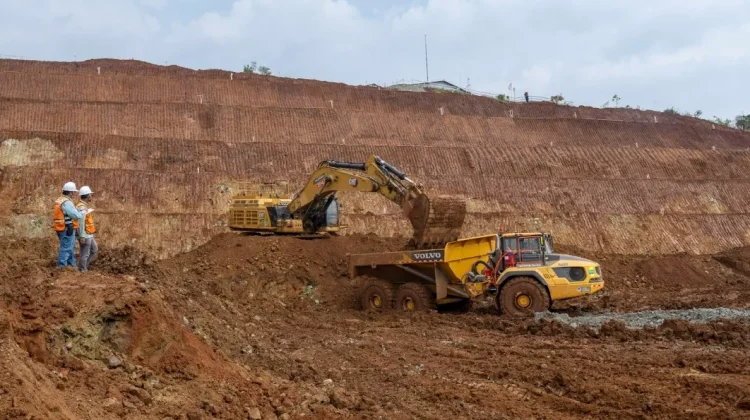
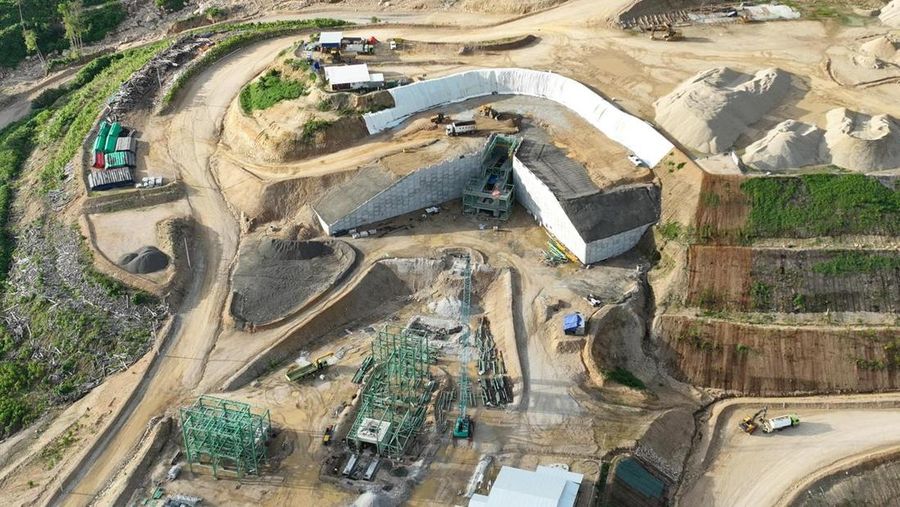
PT Vale Strengthens Nickel Downstreaming and Decarbonization with Clean Energy
Sat 19 Sep 2026, 09:18 AM
Share
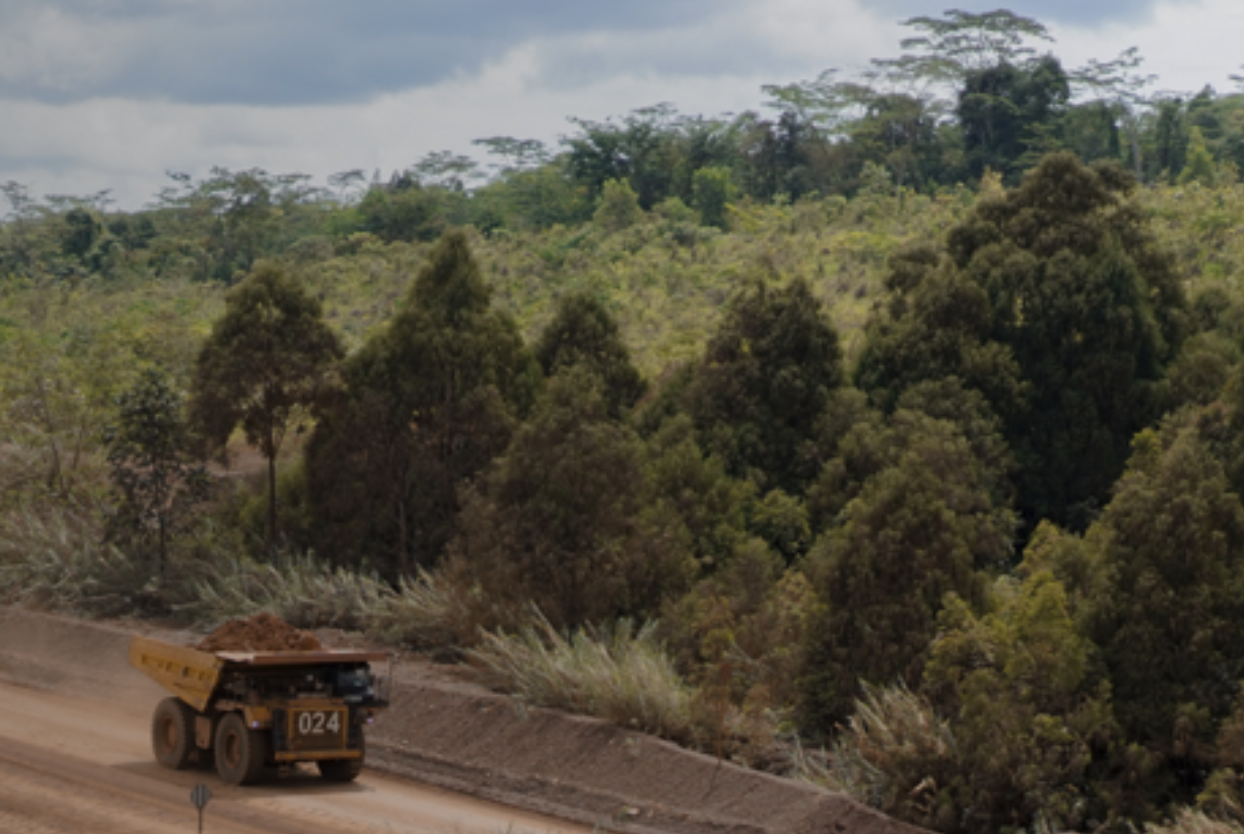
The roar of heavy equipment and nickel processing industrial zones have transformed the landscape of Morowali Regency, turning it into one of the country's most strategic economic centers.
Behind nickel downstreaming, a familiar irony remains, one that the establishment of Bungku State Mining Vocational High School (SMKN Pertambangan Bungku) in 2017 sought to address.
SMKN Pertambangan Bungku was established to prepare local workers so they would not merely become spectators amid the rapid flow of nickel industrialization.
Head of Bungku State Mining Vocational High School Sarfin Suaib said around 80% of the school's first graduating class in 2019 were immediately absorbed into jobs in the nickel industrial area.
To ensure the quality of its graduates matches industry needs, SMKN Pertambangan Bungku has brought in teaching staff with expertise in their respective fields. During the school's early development, SMKN Pertambangan Bungku actively established communication with various players in the nickel industry, including PT Vale Indonesia Tbk.
Sarfin said PT Vale is one of the companies that frequently sends instructors to share their direct experience with students at SMKN Pertambangan Bungku. Collaboration with companies such as PT Vale is intended to ensure that learning materials at SMKN Pertambangan Bungku remain relevant to industry needs.
“Vale also provided classroom guidance at one point. They came again (to teach),” Sarfin told Kompas.com on Thursday (18/6/2026).
In fact, when he was met in his office, Sarfin was actually waiting for an instructor from PT Vale.
“The Mining Geology teachers already have occupational health and safety (K3) materials. But, as preparation for fieldwork practice, we invited the company today to provide K3 training in preparation for the fieldwork. However, the person appointed by PT Vale has not arrived yet,” Sarfin said.
Integrating Sustainability Aspects
Based on PT Vale's 2025 sustainability report (SR), its total investment in Community Development and Empowerment (PPM) through the Indonesia Growth Project (IGP) Morowali reached USD 751,027, or IDR 13.27 billion.
The program covers education, health, real income and employment, economic self-reliance, social and cultural development, opportunities for communities to manage the environment, community institutional development, and supporting infrastructure.
In 2025, PT Vale's PPM program at IGP Morowali focused on strengthening the quality of human resources in empowerment areas, with total investment reaching US$236,925, or around 31.5% of total PPM investment at IGP Morowali.
The program consisted of facilitating research and internships for 20 students and university students across various departments, English-language training in collaboration with Tadulako University for 95 participants from assisted villages, as well as educational seminars on preventing substance abuse for students, teachers, and parents.
In addition, PT Vale's PPM program at IGP Morowali finalized a scholarship policy aligned with the local government starting in 2026, designed to expand access to education while improving the readiness and competencies of the local workforce.
PT Vale is currently aligning its Environmental, Social and Governance (ESG) strategy, risk management, and investment planning.
The improvement of its ESG roadmap reflects the carve-out, expansion, and development of the IGP Morowali and IGP Pomalaa projects, which are important milestones in PT Vale's growth journey.
During the process of updating the roadmap, ESG continues to be implemented through existing governance structures and management systems, with various key initiatives related to climate performance, environmental management, community engagement, and workforce development.
“This process reflects the integration of sustainability aspects from the project development stage through operations and mine closure,” according to PT Vale's 2025 SR.
Nickel Downstreaming Alongside Decarbonization
Nickel downstreaming plays a strategic role in supporting the development of the electric vehicle (EV) ecosystem and the energy transition. However, PT Vale President Director and Chief Executive Officer Bernardus Irmanto said Indonesian nickel products still need to become increasingly competitive in terms of their carbon footprint and the implementation of ESG principles.
“For PT Vale (Indonesia), downstreaming and decarbonization are not two separate agendas. They need to be carried out in tandem,” he said in a statement on Thursday (10/9/2026).
According to Bernardus, carbon emission intensity, energy use, environmental management, as well as social and governance practices will increasingly determine the competitiveness of products in global markets.
“We integrate these aspects into our operations and investments, from the planning stage through closure,” Bernardus said.
He considers sustainability principles to be an important part of the development of PT Vale's growth and downstreaming projects.
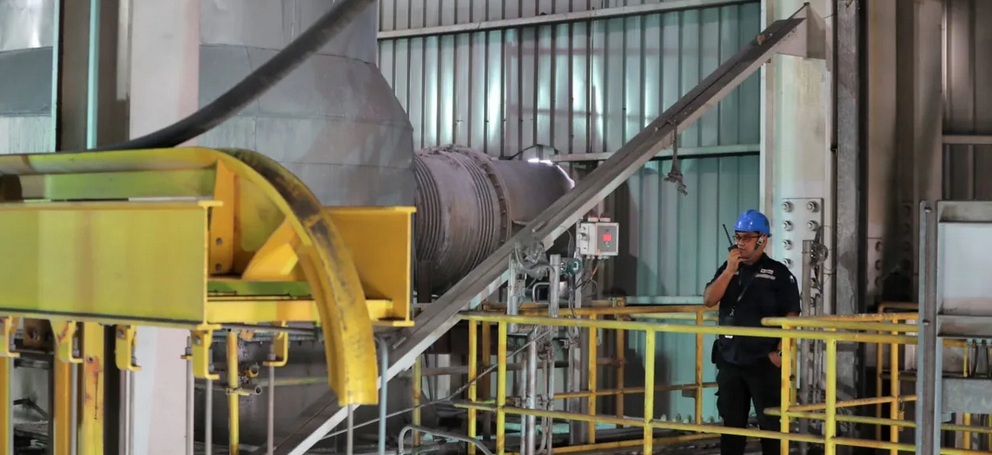
In the context of reducing the carbon footprint of processing facilities, one of PT Vale's main focuses is the use of lower-carbon energy sources. PT Vale has extensive experience in utilizing renewable energy.
For example, it operates three hydropower plants with a total electricity generation capacity of 365 megawatts (MW) to support nickel operations and processing in Sorowako. “This advantage provides an important foundation for efforts to reduce emissions intensity from production activities,” Bernardus said.
In addition, PT Vale is implementing decarbonization initiatives through increased energy and operational efficiency (waste heat recovery). PT Vale is also implementing technologies that are more efficient in energy consumption, using biomass to replace oil and coal, and developing projects that take emissions aspects into consideration from the planning stage.
“We also continue to evaluate opportunities to use lower-carbon energy and technologies, such as HPAL (High-Pressure Acid Leach), in accordance with the characteristics of each project and the development of available technologies,” he said.
An HPAL smelter is a facility for processing and refining nickel ore using hydrometallurgical technology with the assistance of sulfuric acid under high pressure and temperature. The facility is intended to process low-grade nickel ore (limonite) into a final product known as MHP (Mixed Hydroxide Precipitate), a key raw material for EV batteries.
According to Clean Transition's 2025 research report titled “Greening Nickel Downstreaming,” the emissions intensity of major nickel companies in Indonesia reaches 57–70 tons of CO2 per ton of nickel, well above the global average of 45 tons. The large carbon footprint of products from most nickel processing industries and smelters in Indonesia is attributed to the use of captive coal-fired power plants to meet their primary energy needs.
This contrasts sharply with PT Vale Indonesia, at 29 tons of CO2 per ton of nickel, because it already uses renewable energy. PT Vale has shown that the use of renewable energy at nickel smelters can reduce emissions from the final product by up to 55%.
Replacing Smelter Energy Sources
Director of Climate Change Mitigation at the Ministry of Environment (KLH) Haruki Agustina said the nickel industry needs to immediately formulate a decarbonization roadmap toward net-zero emissions (NZE), as mining is included in Indonesia's national standards (SNI) targets and the energy sector is the second-largest contributor to greenhouse gas (GHG) emissions.
The nickel industry's decarbonization strategy must target mineral processing, smelters, and transportation, all of which require massive amounts of energy.
“It can utilize renewable energy, electrification (usually for transportation), (adopt) low-emission process technologies, low-carbon fuels, and here biomass alternatives can be used in the smelting process, including considering nature-based solutions later on,” Haruki said at the National ESG-Nickel Conference on Thursday (10/9/2026).
Program Manager for Transition Minerals and Green Industrial Policy at INDEF Robie Kholilurrahman said improvements in investment and nickel industry downstreaming require a smelter decarbonization strategy that shifts the focus from quantity to quality.
Therefore, the focus should not be on building more smelters, but rather on replacing their energy sources with renewable energy.
Although the investment would be somewhat higher, he said, replacing captive coal-fired power plants with renewable energy would significantly reduce GHG emissions. By using renewable energy, the company's recurring operating expenses (OPEX), such as electricity costs, would be lower.
“Actually, the investment needs to be directed not toward smelter expansion anymore, but toward avoiding new coal-fired power plants, then supplying clean electricity using solar power plants and batteries, improving efficiency in the process stage to reduce electricity loads, and also connecting to the PLN grid system rather than remaining captive,” Robie said.
Advertisement