Indonesia’s Ministry of Energy and Mineral Resources: Nickel Mining Plans to Align with Smelter Demand of 320 Million Tons
Wed 07 Oct 2026, 08:36 AM
Share
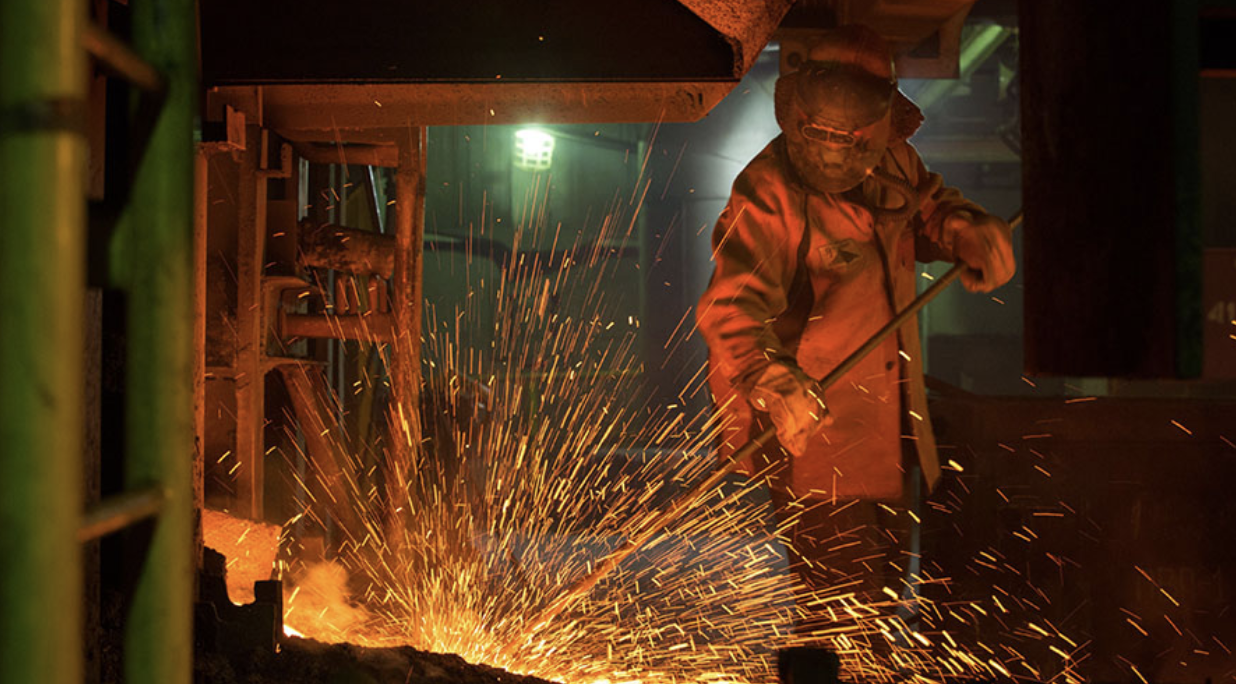
The Energy and Mineral Resources Ministry (ESDM) has reaffirmed that it will continue to set nickel ore production quotas under the work plan and budget (RKAB) based on the needs of processing and refining facilities, or smelters.
Cecep Mochammad Yasin, director of mineral mining business development at the ministry’s Directorate General of Mineral and Coal (Minerba), said nickel smelters currently require around 320 million metric tonnes (mt) of ore annually.
However, he stressed that the directorate general continues to monitor potential annual increases in smelter production capacity, including facilities that have entered the commissioning stage.
“We also match the quotas against smelter [requirements]. We have currently verified that the planned nickel smelter capacity stands at around 320 million [tonnes]. Of course, that figure continues to grow from year to year,” Cecep said at BIG Downstream Insight on Tuesday (October 6, 2026).
“Several smelters are still making progress, and a number of them are expected to enter commissioning in the near future,” Cecep stressed.
Cecep said several factors could explain why nickel mining companies do not receive their expected production quotas.
These include discrepancies between reserve data and production performance, as well as the needs of smelters in their respective regions.
Cecep also projected that nickel ore production this year would reach around 290 million mt, exceeding the 2026 RKAB quota of 260 million to 270 million mt.
He said the projection was based on average nickel ore production through the third quarter of 2026.
“The forecast is that production will be almost the same as last year. Based on the forecast and the performance of each company, it will be roughly the same, at around 290 million [tonnes],” Cecep stressed.
Despite the gap between smelter ore requirements and projected production, Cecep said the supply shortfall could be covered by existing stockpiles.
He estimated that Indonesia’s national nickel ore stockpile stood at around 40 million mt at the end of 2025, meaning there was no ore deficit.
“If we look at the figures at the end of 2025, they had stockpiles of close to 40 million [tonnes]. When they say supply is insufficient, it reflects concerns about securing supplies to ensure next year’s targets are met, based on what happened in previous years,” Cecep said.
The Indonesian Nickel Miners Association (APNI) recorded nickel ore consumption of 120.6 million mt from January to June, equivalent to 46.2% of the approved 2026 RKAB production quota of 260 million to 270 million mt.
APNI Secretary-General Meidy Katrin Lengkey said 422 active nickel mining business licenses (IUPs) currently supply 79 processing and refining facilities, or smelters.
She explained that the 79 smelters comprise 55 pyrometallurgical facilities using rotary kiln electric furnace (RKEF) technology, 10 hydrometallurgical plants based on high-pressure acid leach (HPAL) technology, 10 nickel matte producers, and six integrated stainless steel smelters.
Meidy noted that the 79 smelters would require up to 415 million mt of nickel ore annually if operating at full capacity.
“As of June 2026, domestic ore consumption stood at around 120.06 million tonnes, or approximately 46.2% of the approved quota. Meanwhile, the ore requirements of the 79 downstream processing facilities, if all operated at full capacity, are estimated to reach around 415 million tonnes annually,” Meidy said in a written statement on Monday (July 20, 2026).
Advertisement