From Bauxite to Aluminum: Exploring Indonesia’s Strategy to Build a Value-Added Industry
Thu 27 Aug 2026, 09:16 AM
Share
Downstreaming has become Indonesia’s strategy to turn its natural wealth into value-added products, create jobs, and strengthen national industry.
President Prabowo Subianto’s remarks on downstreaming marked a new direction for Indonesia’s economic development. Speaking at the groundbreaking of the second phase of the national downstreaming projects at Refinery Unit IV Cilacap on April 29, 2026, Prabowo stressed that “downstreaming is the only way for us to become more prosperous.”
The statement was not merely about building factories or smelters. More broadly, downstreaming reflects a shift in how Indonesia views and manages its natural resource wealth.
For hundreds of years, Indonesia has been known as a country rich in natural resources. However, that wealth has yet to fully provide added value to the national economy.
History records that the Nusantara archipelago became a destination for various major powers around the world because of its wealth of commodities. Spices, gold, oil, coal, nickel, copper, and bauxite became resources that were sought after.
The problem is that many of these commodities have left Indonesia for years in the form of raw materials. Meanwhile, greater economic value has instead been captured by countries with the capacity to process them into high-value products.
This is now being changed. Indonesia no longer wants to serve merely as a supplier of raw materials to global industries, but also to build its capacity as an industrial country capable of processing its own resources.
The move is expected to create jobs, strengthen domestic supply chains, and improve Indonesia’s competitiveness.
It is in this context that downstreaming has strategic significance. The policy is not merely a process of processing commodities, but part of an effort to strengthen national economic sovereignty.
As President Prabowo has said, abundant natural resources do not automatically make a country prosperous. It takes the ability and courage to take control of and process that wealth.
This effort is being pursued through investment, the development of processing industries, technological capabilities, and improvements in human resources.
Thus, downstreaming is expected to serve as a bridge between Indonesia’s abundant natural resources and improved public welfare.
National Strategic Project as the Driver of Downstreaming
Big ideas require strong implementation instruments. This is where National Strategic Projects (PSNs) play an important role.
PSNs have traditionally been known to the public mainly for the construction of toll roads, dams, ports, and airports. However, over time, PSNs have evolved into government instruments to accelerate national economic transformation, including promoting natural resource-based industrialization.
Through PSN status, projects receive accelerated cross-ministerial coordination, support in resolving licensing issues, spatial planning synchronization, and the development of supporting infrastructure. The objective is simple but fundamental: to reduce investment barriers so that strategic industrial development can move faster.
The transformation has become increasingly evident under President Prabowo’s administration. In April 2026, the government launched 13 second-phase national downstreaming projects with investment of around IDR 116 trillion as part of its agenda to strengthen the foundations of national industry.
This policy direction shows that the government no longer views downstreaming as merely a sectoral project. Downstreaming has now become an integrated national development strategy linked to energy security, the strengthening of manufacturing, job creation, and increased exports of value-added products.
From a macroeconomic perspective, the benefits of downstreaming go far beyond higher export values. Every refining facility that is built generates demand for construction services, logistics, ports, transportation, energy providers, and vocational education. Its multiplier effects reach various sectors while strengthening regional economies.
Therefore, PSNs are not only about building physical projects, but also about building new industrial ecosystems.
Bauxite and the Future of Industry
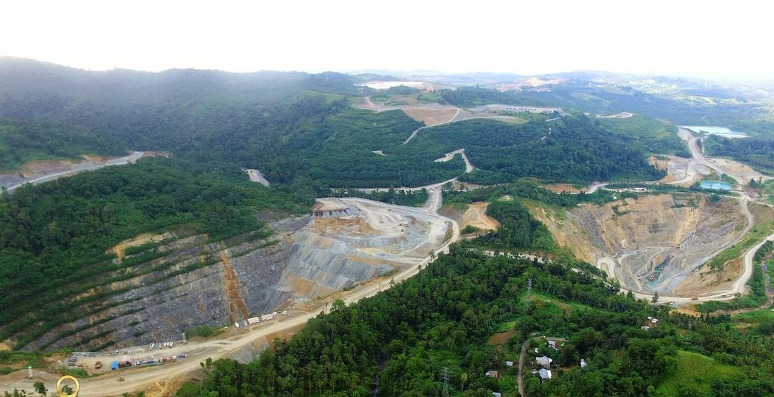
Among Indonesia’s various strategic commodities, bauxite holds an important position. Indonesia is one of the countries with the world’s largest bauxite reserves, particularly in West Kalimantan and the Riau Islands. However, for years, the commodity was largely exported in raw form, meaning the greatest added value was instead captured by other countries.
Yet bauxite’s journey does not end as a mined mineral. Once refined into alumina and then processed into aluminum, the commodity becomes a raw material for almost every modern industry.
Aluminum is used in electric vehicles, aircraft, building construction, electricity transmission networks, solar panels, food packaging, and various electronic devices. Global demand for aluminum is expected to continue rising as the green economy and energy transition develop.
This means the future of the aluminum industry is not only about mining, but also about Indonesia’s position in global industrial supply chains.
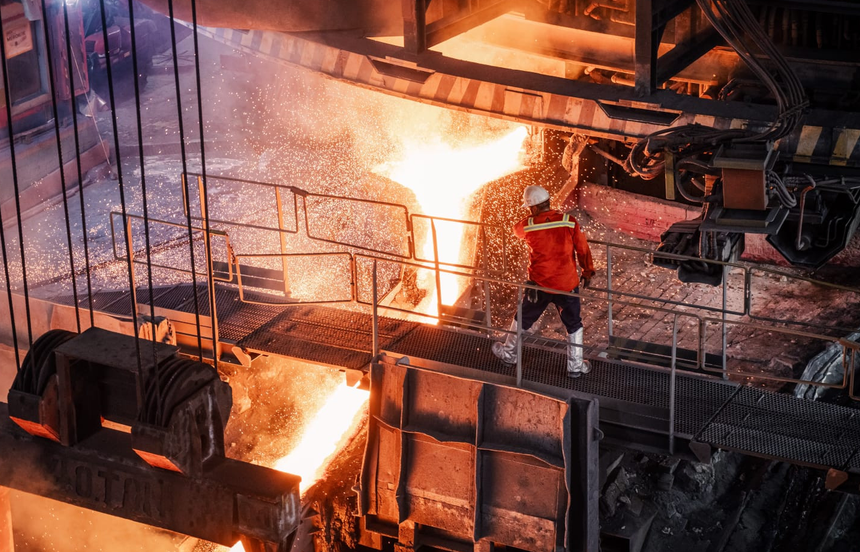
For this reason, the government has taken steps to halt the export of raw materials and promote the construction of refining facilities domestically. The policy has become the foundation for the emergence of various large-scale national bauxite downstreaming projects.
From an economic perspective, bauxite downstreaming is viewed as one of Indonesia’s new engines of economic growth. The policy is projected to generate added value of up to USD 3.8 trillion, create potential state revenues of around IDR 62 trillion per year, open thousands of jobs, and strengthen Indonesia’s position in the global aluminum industry supply chain.
SGAR Mempawah and the National Downstreaming Chain
One of the most strategic projects is the development of the Smelter Grade Alumina Refinery (SGAR) in Mempawah, West Kalimantan.
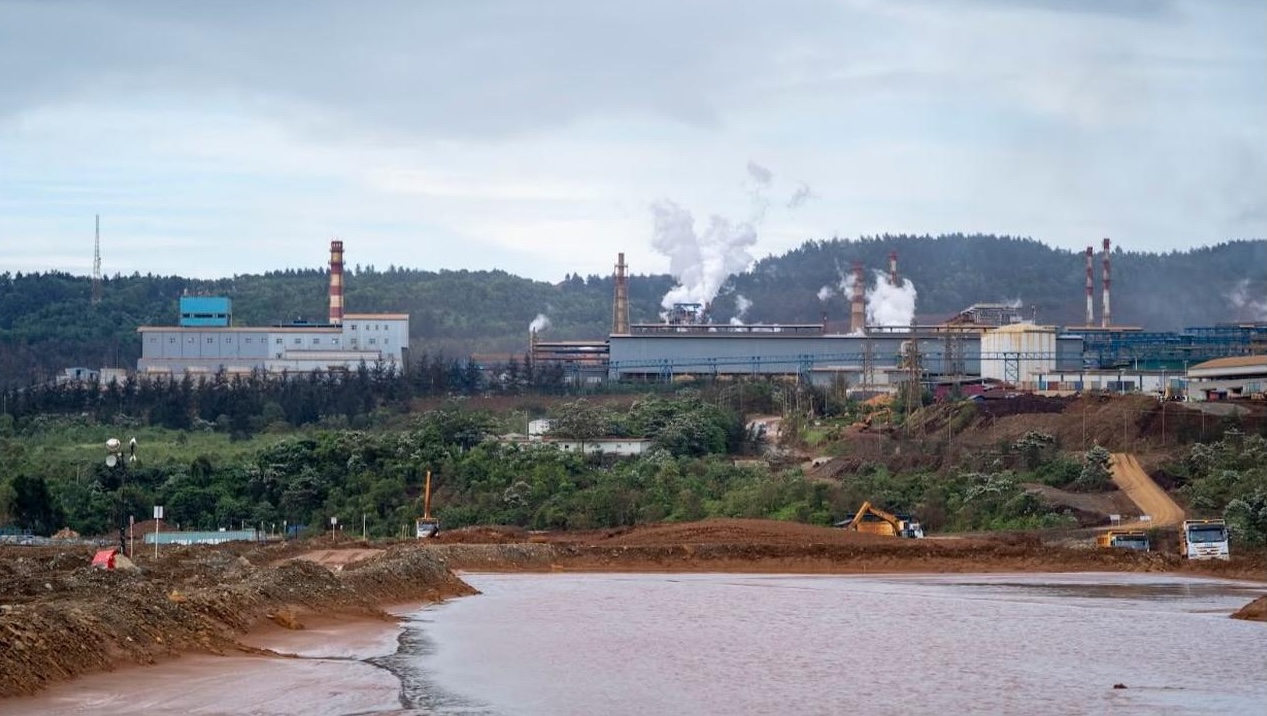
The facility, developed by PT Borneo Alumina Indonesia, a joint venture involving a member of MIND ID, represents an important milestone in national bauxite downstreaming. The project is designed to convert bauxite ore into alumina so that Indonesia no longer depends on exports of raw materials. The government has also included the facility’s development as part of a National Strategic Project.
The presence of SGAR carries an important message: downstreaming does not stop at a single factory. It builds a new industrial chain connecting mining, refining, manufacturing, logistics, energy, and downstream aluminum industries.
In other words, Indonesia is beginning to build an industrial foundation that for decades had largely been located overseas.
However, developing a national aluminum industry cannot rely on a single project. Indonesia needs an interconnected industrial ecosystem so that raw material supplies, refining facilities, power plants, ports, and industrial estates can develop in an integrated manner.
This is where the development of bauxite-based industrial estates takes on strategic significance.
Downstreaming Is More Than an Economic Term
Within this framework, accelerating the development of a bauxite industrial estate has been designated as a National Strategic Project to develop an integrated alumina and aluminum industrial ecosystem. Development documents show phased investment of around USD 3.15 billion, with plans to build alumina and aluminum processing facilities, power plants, ports, and supporting industries within a single area.
The concept is relatively simple but has a major impact. Bauxite, which has so far primarily been a mining commodity, will be processed closer to the source of raw materials, making logistics costs more efficient, increasing added value, and creating opportunities for further investment.
More importantly, the development of the industrial estate creates a new center of economic growth outside Java. At the same time, regional poverty rates have declined, while the project has absorbed thousands of local workers even before reaching full production.
For surrounding communities, downstreaming is no longer merely an economic term. It takes the form of employment opportunities, skills training, increased local business activity, and growing demand for transportation, trade, and micro, small and medium-sized enterprises.
This is the true meaning of downstreaming that is often overlooked. Added value is reflected not only in export figures, but also in rising household incomes and the growth of regional economies.
Of course, large-scale industrial development must continue alongside environmental governance, transparency, regulatory compliance, and community involvement. Sustainability is an important prerequisite to ensure that economic benefits can continue over the long term and gain social legitimacy.
Natural Wealth as Industrial Strength
President Prabowo’s speech in Cilacap ultimately reminds us of one fundamental reality: Indonesia is not short of natural resources. The challenge has always been how to turn that wealth into tangible prosperity.
Downstreaming addresses that challenge by creating added value. PSNs provide an acceleration mechanism to make that agenda more effective. If the entire value chain operates consistently, from responsible mining and processing industries to the development of industrial estates, human resource development, and further downstreaming, Indonesia will not only be a raw material exporter, but also an important player in the global aluminum industry.
Ultimately, downstreaming is not simply about building smelters. Downstreaming is about building the future. It is an effort to transform natural wealth into industrial strength, connect new growth centers with public prosperity, and ensure that the added value of Indonesia’s resources is truly enjoyed by Indonesians themselves.
At this point, President Prabowo’s message finds its relevance. The rise of a nation is determined not only by how much natural wealth it possesses, but by the courage to turn that wealth into prosperity. Downstreaming and PSNs are two important instruments in that journey.
Advertisement