Merdeka Gold (EMAS) Targets 700,000 Ounces of Gold Production, Ramps Up Pani Mine Development
Fri 16 Oct 2026, 09:04 AM
Share
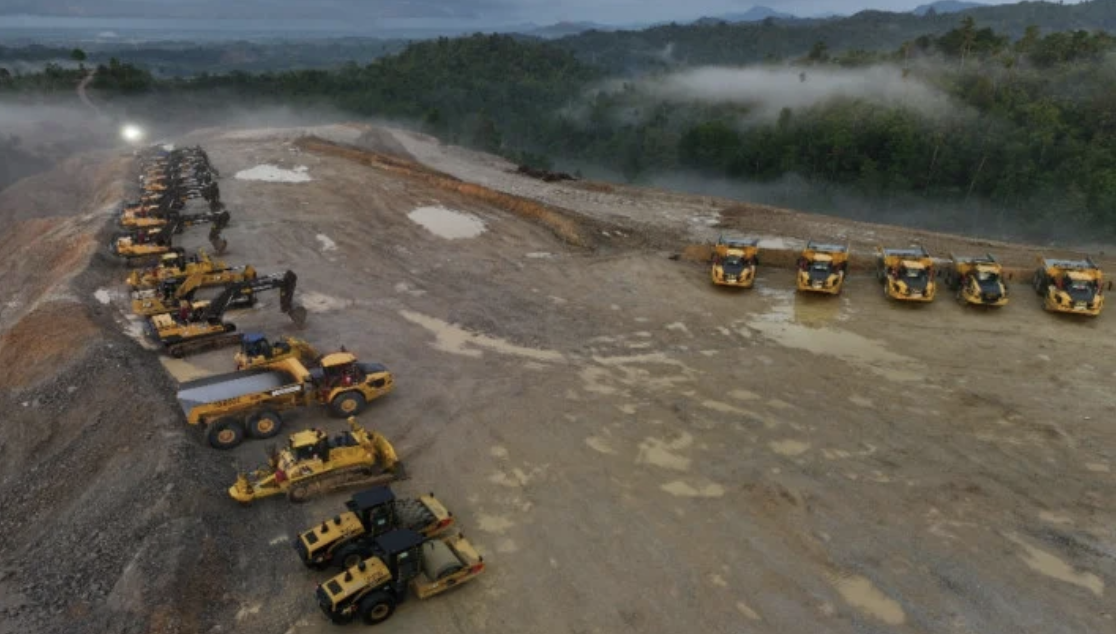
PT Merdeka Gold Resources Tbk. (EMAS) is accelerating the development of its Pani Gold Mine through the construction of a second-phase carbon-in-leach (CIL) processing facility to increase processing capacity and support the company's gold production expansion.
Merdeka Gold Resources President Director Boyke P. Abidin said construction of the first-phase CIL facility was progressing, while the company was also accelerating preparations for the second phase, which is designed to be comparable in scale to the first facility.
“The Phase 1 CIL project is making good progress in engineering, procurement, and construction. By designing a plant that can accommodate additional capacity, we have secured our planned production targets while also providing room for further increases,” he said in a press release on Friday (16/10/2026).
Once both facilities have completed operational trials, or commissioning, the combined CIL processing capacity is targeted to reach 500,000-700,000 ounces per year, up from the initial capacity of 250,000-350,000 ounces per year.
The first-phase CIL facility is designed to have a processing capacity of 12 million tonnes per annum (Mtpa), with an additional capacity of up to 20% that would allow processing volumes to reach 14.4 Mtpa.
Boyke said construction of the second facility would increase gold production capacity at the Pani Gold Mine while accelerating the company's future cash flow generation.
“Our plan to build a second CIL facility will significantly increase gold production capacity at Pani, while accelerating Phase 2 will enable us to bring forward future cash flow generation” he said.
In terms of construction, basic engineering for the first-phase CIL facility has been completed, while detailed engineering is at an advanced stage. All major equipment requiring long lead times has also been prepared, and construction contractors have been mobilized to the project site.
Civil works have begun in several areas, including grinding, leaching, and thickening. Construction of the tailings storage facility (TSF) is also progressing, including the construction of a diversion dam and water diversion systems ahead of the filling of the initial dam embankment.
The company has also incorporated several key infrastructure components needed to support the second-phase CIL facility into the first-phase design. These include crushing, conveying, stacking, water utilities, and reagent systems.
In addition, preliminary construction work, including large-scale land preparation for the second phase, will be completed as part of the first phase. This step is expected to make construction of the second facility more efficient and structured.
Development of the second phase will proceed after the first-phase facility has successfully completed commissioning and increased its operational capacity.
EMAS is also preparing an updated feasibility study covering the second phase. The study will take into account changes in the production profile, capital requirements, and project economics following the expansion.
The company expects the phased expansion of its CIL facilities to increase the operational scale of the Pani Gold Mine and accelerate the mine's contribution to EMAS' revenue and cash flow.
Nevertheless, the project remains exposed to several risks, including macroeconomic volatility, supply chain uncertainties, operational complexities, and regulatory changes that could affect the project completion schedule.
Advertisement