Ministry of Energy and Mineral Resources Projects Critical Mineral Demand to Surge
Thu 18 Jun 2026, 15:20 PM
Share
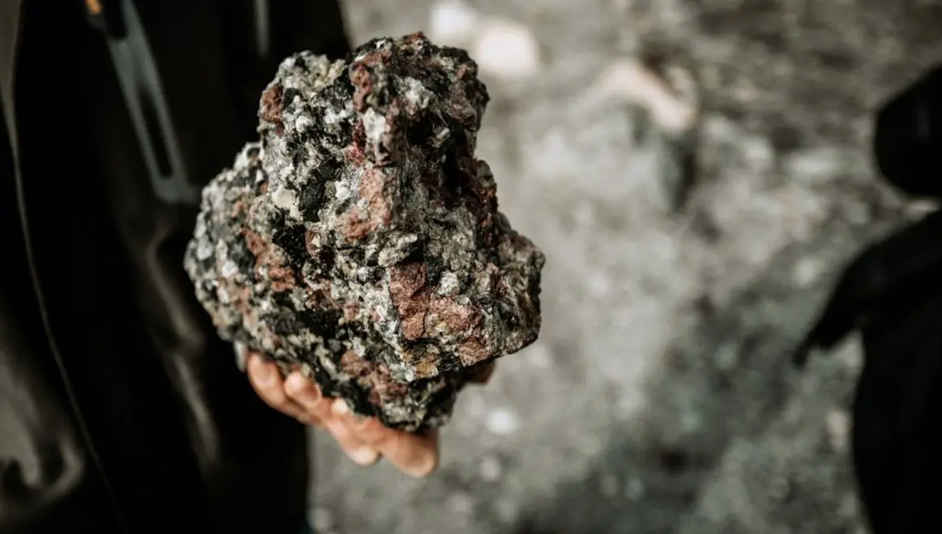
Global demand for critical minerals is projected to continue rising sharply through 2040, driven by the accelerating transition toward renewable and low-carbon energy systems. This trend in the utilization of strategic commodities was reported by Bloomberg Technoz based on projections released by Indonesia’s Ministry of Energy and Mineral Resources (ESDM) on Wednesday, June 17, 2026.
Cecep Mochammad Yasin, Director of Mineral Business Development at the Directorate General of Minerals and Coal (Minerba), confirmed that materials such as lithium, cobalt, graphite, copper, and rare earth elements have become essential inputs for environmentally friendly technologies. As a result, control over the mining sector is expected to play a decisive role in determining a country’s future economic competitiveness.
“Global trends indicate a structural transformation in the world’s energy needs. Demand for critical minerals is projected to continue increasing through 2040 to support the development of electric vehicles, batteries, renewable energy systems, and modern electricity grids,” Cecep said during a public discussion hosted by the Institute for Development of Economics and Finance (Indef) on Wednesday (June 17, 2026).
The government believes that sovereignty in this sector cannot be limited to ownership of raw natural resource reserves beneath the ground. Strengthening capabilities in downstream processing, domestic market management, and sustainable manufacturing will be essential to securing Indonesia’s bargaining position in the global economy.
“Sovereignty does not end with ownership of resources. It must be realized through mastery of processing, manufacturing, market development, and a sustainable mining industry,” Cecep emphasized.
Despite the enormous opportunities presented by the global market, Indonesia’s investment climate continues to face challenges stemming from overlapping regulations across sectors. Governance policies for mining commodities are often viewed as insufficiently aligned among ministries and government agencies.
Fitria Astuti Firman, Associate Energy Analyst at the Secretariat General of the Ministry of Energy and Mineral Resources, stated that the government is actively working to address regulatory gaps to secure the future of Indonesia’s mining industry. Efforts to harmonize cross-sector policies are being accelerated in order to provide greater legal certainty for investors and industry participants.
“Regulations are not changing because the government is indecisive. There are gaps and shortcomings in the regulatory framework that need to be addressed. Our shared objective is to strengthen and improve the mining industry for the future,” Fitria explained.
To overcome investment barriers and capitalize on global opportunities, the ministry is focusing on optimizing financial incentives through a fair and transparent mineral benchmark pricing formula. Additional strategic measures include the development of national Environmental, Social, and Governance (ESG) standards and the implementation of the Minerba Online digital licensing system to streamline bureaucratic processes.
“There are indeed instances where ministries and agencies may not be fully aligned. This remains a cross-sector challenge that requires further work. Hopefully, investors will also view these developments as part of a broader effort to improve the sector. The industry itself must continue to grow and mature,” Fitria said.
“The government continues to refine the Mineral Benchmark Price (HPM) formula for metals and coal to ensure pricing fairness while optimizing state revenues,” she added.
“This initiative is crucial to ensuring that Indonesian mineral products can be integrated into global supply chains. A successful example is the partnership between PT Vale and global automotive giants such as Ford and Volkswagen, both of which require compliance with internationally recognized ESG standards,” Fitria noted.
According to official government data, five key commodities currently serve as the foundation of Indonesia’s mining downstream development strategy.
Indonesia’s Key Critical Mineral Commodities
| Mineral | Global Ranking | Estimated Reserve Lifespan | Primary Uses |
|---|---|---|---|
| Nickel | Largest reserves in the world | Approximately 31 years (annual production of 190 million tons) | Electric vehicle batteries, stainless steel |
| Tin | Second-largest reserves in the world | Approximately 22 years (annual production of 65,000 tons) | Electronic components, soldering materials, solar panels |
| Bauxite (Aluminum) | Fourth-largest reserves globally (1.2 billion tons) | Not specified | Manufacturing, electric vehicle bodies, electrical cables |
| Copper | Seventh-largest reserves globally (28 million tons) | Not specified | Renewable energy generators, electric motors, electrical wiring |
| Rare Earth Elements (REEs) | Preliminary indicative potential across 1.2 million hectares | Not specified | By-products of tin mining, including monazite and xenotime |
Source: https://www.asatunews.co.id/permintaan-mineral-kritis-melonjak-esdm#google_vignette
Advertisement